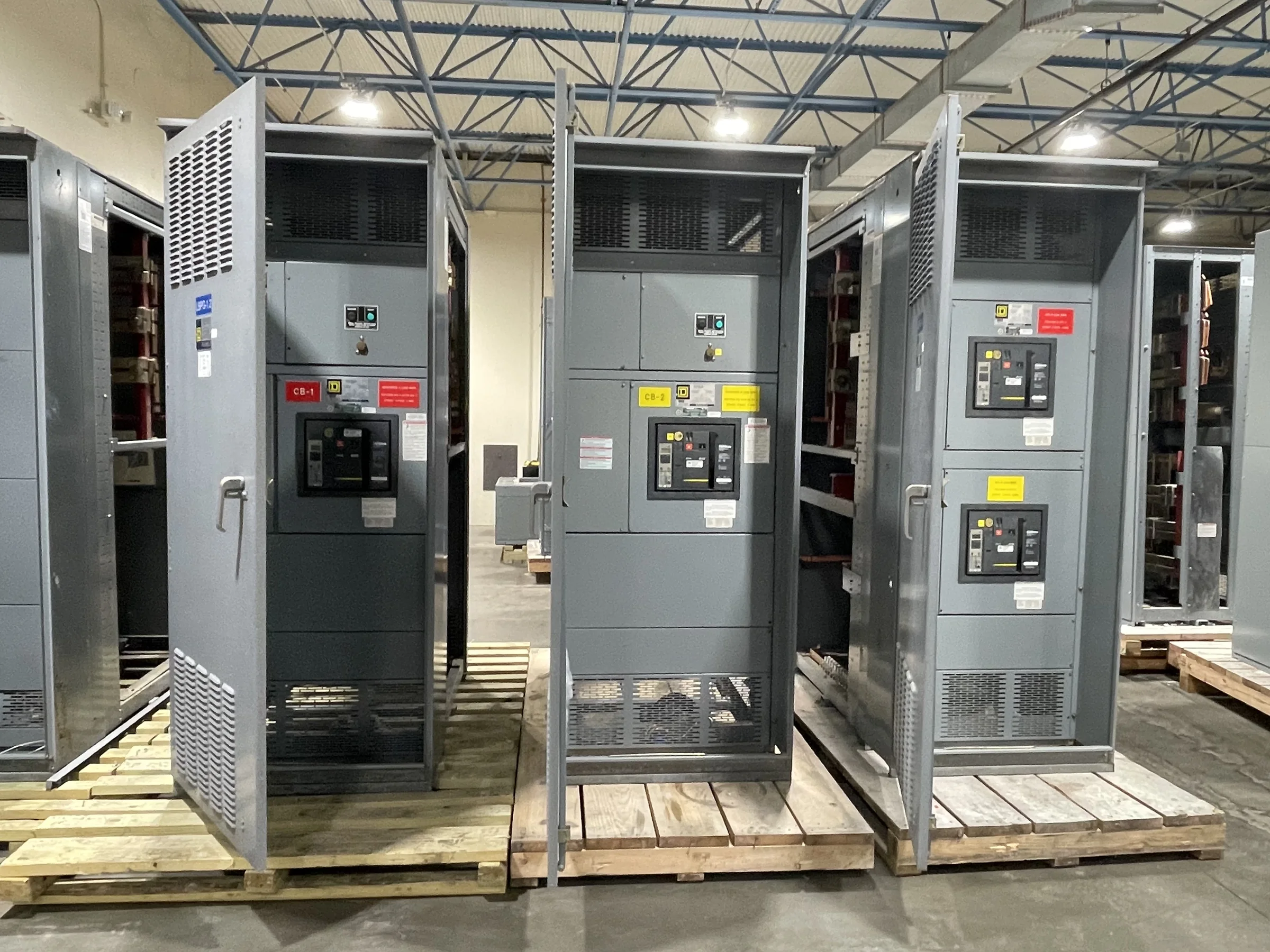
Define the MCC Around the Motor Loads
A motor control center (MCC) should be configured from the actual motor schedule, not from a general equipment count. For each load, document horsepower, voltage, phase, full-load current, starting method, duty, and any required reversing or braking functions. Identify which motors may start together; simultaneous starts can affect feeder loading, voltage drop, and upstream protective-device coordination. Also note whether the process needs variable-frequency drives, soft starters, across-the-line starters, or a combination. These choices influence unit arrangement, heat dissipation, wiring space, and service access. Include spare capacity as an explicit operating requirement, distinguishing empty buckets from provisions for future units. A U.S. manufacturer can build around the submitted project requirements, but final ratings, device selection, and compatibility depend on the reviewed design.
Coordinate Protection, Fault Duty, and Control Strategy
The MCC must work as part of the facility’s distribution and control system. Procurement documents should identify available fault current at the lineup, upstream protective devices, grounding method, and the intended short-circuit rating; the engineer of record should confirm the basis and coordination requirements. A rating cannot be inferred from motor horsepower or selected independently of the source equipment. Control details matter too: specify control voltage, local and remote operation, interlocks, emergency-stop interfaces, and the expected response to loss of communications or power. If drives are included, document motor cable lengths, bypass needs, harmonic considerations, and any required network protocols. Resolving these interfaces before release reduces field modifications and commissioning delays. Applicable standards, evaluation scope, and product markings must be confirmed for the particular assembly and project.


Plan for Pasadena’s Industrial Operating Conditions
Pasadena facilities may place motor equipment in process areas where heat, humidity, dust, corrosive exposure, vibration, or washdown influence enclosure and cooling decisions. These conditions vary by site, so provide the actual installation location, ambient range, indoor or outdoor exposure, elevation if relevant, and any hazardous-area classification established by qualified project personnel. An enclosure that suits a clean electrical room may not suit a nearby process environment; added sealing can also affect heat rejection and maintenance access. Identify ventilation, HVAC limits, required ingress protection, and clearance around the lineup rather than relying on a generic location description. For Gulf Coast projects, confirm whether storm exposure, water intrusion, or elevated mounting concerns apply to the specific room. The manufacturer can review stated conditions, but suitability remains project-specific.
Make the Site Layout and Delivery Route Part of the Design
A lineup that fits on an electrical drawing may still be difficult to place, connect, or maintain in the building. Share room dimensions, door and corridor widths, ceiling height, floor loading limits, overhead obstructions, working clearances, and the planned path from receiving to final position. Confirm whether the assembly must be shipped in sections and how those sections will be handled and rejoined; transport configuration depends on the approved design and manufacturer review. In Pasadena, coordinate delivery with the facility’s receiving hours, security procedures, truck access, unloading equipment, and any restrictions near active plant operations. A site contact should verify route measurements before shipment. Early coordination matters because a blocked turn or unavailable lift can disrupt installation even when the equipment itself is ready.
Submit a Complete Package for a Useful Quote
A request for pricing is most useful when it includes a one-line diagram, motor list, preliminary elevation, specification, and the project’s required submittal schedule. Attach available short-circuit and coordination studies, load information, control schematics, network requirements, and notes on existing switchboards, transformers, or MCCs that the new lineup must connect to. Identify the governing project standards, requested options, spare-unit expectations, and any approved-equipment constraints. Mark unresolved items as open questions rather than leaving assumptions hidden in a specification. This helps the manufacturer identify scope gaps, clarify exclusions, and distinguish a budgetary estimate from a proposal based on reviewed documents. American components and custom builds may be available, but component selection, exact configuration, pricing, and schedule are confirmed for each project, not assumed from a general product description.
Set Timing, Submittals, and Commissioning Responsibilities
Discuss schedule at the start of procurement, especially when the MCC is tied to a plant shutdown, new production line, or phased construction sequence. The required dates should cover drawing review, approval, manufacturing, inspection, shipping, receiving, installation, and startup—not just the requested ship date. Short lead times may be offered, but actual timing depends on design completeness, component availability, approvals, and production conditions; obtain a project-specific schedule before committing downstream work. Assign responsibility for reviewing drawings, supplying field measurements, approving deviations, and coordinating interfaces with the electrician, controls contractor, and utility or facility team. Before startup, qualified personnel should verify installation, grounding, protective settings, wiring, and control functions under approved procedures. Keep equipment de-energized for installation and inspection; energization and commissioning require appropriate authorization and safety controls.