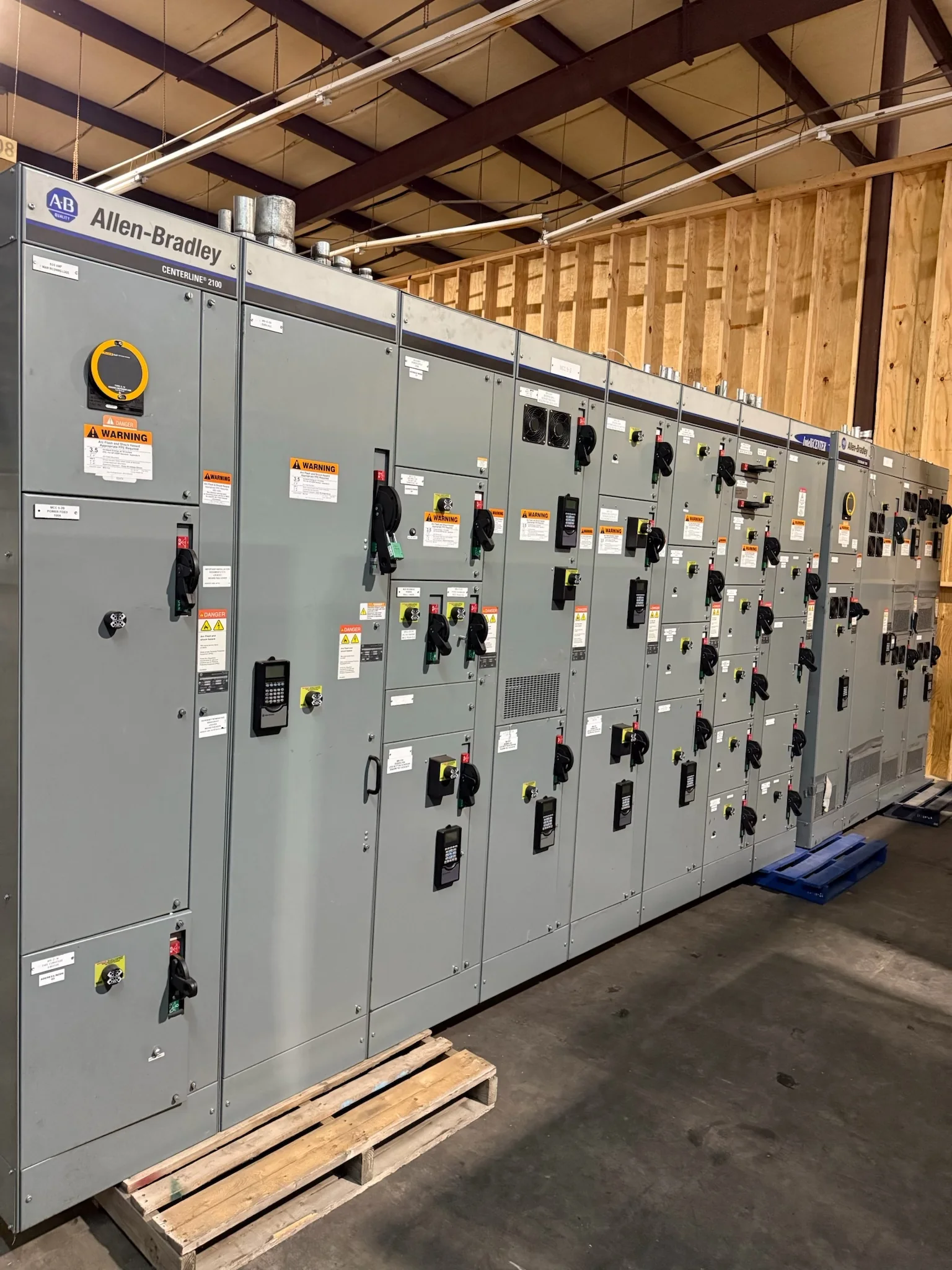
Define the Motor Control Center Around the Loads
For a Texas City project, start the motor control center (MCC) specification with the driven equipment, operating sequence, and maintenance plan—not a presumed lineup template. List each motor’s nameplate data, starting method, duty cycle, control voltage, and required protective functions, then identify spare or future units separately. Pumps, fans, compressors, conveyors, and process equipment can have different starting and control needs even when their horsepower appears similar. This distinction affects unit selection, bus loading, heat dissipation, and the room required for the lineup. Confirm whether operators need local controls, remote commands, status contacts, or integration with a plant control system. A complete load and control schedule gives the manufacturer a sound basis for developing a project-specific proposal and reduces late changes that can affect footprint, price, and delivery.
Coordinate Electrical Ratings With the Distribution System
MCC ratings must suit the electrical system at the point of connection, so provide the available voltage, phase and frequency, grounding arrangement, and upstream protective-device information during quoting. Available fault current and the intended short-circuit rating deserve particular attention: a lineup cannot be selected by motor voltage or amperage alone. Ask the project engineer to identify the required rating and coordination approach, including any applicable arc-flash or selective-coordination requirements. Verify how the proposed MCC will connect to the service equipment, transformer, or distribution switchboard, and whether incoming cables, bus connections, or a main device are part of the scope. These details affect equipment configuration and review. Final ratings, protective-device choices, and compatibility should be confirmed against the project documents and manufacturer’s approved submittals, not assumed from a general product description.


Account for Texas City’s Coastal Industrial Conditions
Texas City’s coastal, industrial setting makes the installation environment an important input to equipment selection. Share the intended room or enclosure location, expected ambient conditions, ventilation approach, exposure to moisture or corrosive agents, and any site-specific environmental requirements. A room near process areas may face different contamination or temperature concerns than a conditioned electrical room; the distinction can influence enclosure details, finish, and maintenance expectations. Also establish whether the MCC will be indoors, outdoors, or in a protected structure, and identify any owner or engineering standards that govern construction. Do not assume a particular enclosure or material is suitable simply because it has worked elsewhere. The engineer and manufacturer should review the actual conditions together so the specified assembly fits its environment and the site can plan appropriate access and upkeep.
Plan the Electrical Room and Installation Sequence
Before releasing equipment, compare the proposed lineup dimensions and access needs with the room layout, cable-entry direction, and installation route. Texas City facilities may have active operations, congested process areas, limited laydown space, or narrow access paths that make a delivery sequence as important as the final footprint. Confirm door and corridor clearances, turning points, floor capacity, overhead obstructions, and available staging space with the site team. Establish whether the lineup will be installed in one section or multiple shipping sections, and coordinate lifting and handling plans with qualified personnel. The project schedule should also account for foundation or housekeeping-pad readiness, conduit placement, and access for adjacent trades. Resolving these constraints during design helps prevent field modifications, delayed setting, and conflicts with operating equipment or other construction work.
Make Submittals and Scope Boundaries Work for Procurement
A useful request for quotation package includes a one-line diagram, load schedule, control schematics or sequence narrative, room layout, applicable specifications, and the required approval and delivery milestones. State which party supplies field cabling, network hardware, programming, startup, and final connections; ambiguous boundaries can leave critical work uncovered even when the equipment itself is correct. Identify requested spare units, spare parts, labeling conventions, document formats, and any owner-specific review process. For a new MCC, distinguish manufacturer-furnished equipment from installation and commissioning services rather than assuming these are included. Review exceptions and clarifications alongside the commercial offer, especially where they affect ratings, interfaces, or schedule. A U.S. manufacturer can discuss custom construction, American components, and project timing, but configuration, component availability, and delivery commitments must be verified for the actual order.
Coordinate Delivery, Turnover, and Future Maintenance
Delivery planning for Texas City should connect the equipment schedule to site receiving rules, construction access, and the date the electrical room will be ready. Share the receiving location, unloading responsibility, delivery-hour restrictions, required notice, and any carrier or gate procedures before shipment is arranged. Nationwide shipping can support projects in the area, but routing, shipment configuration, and timing depend on the finished order and site conditions; confirm them with the manufacturer rather than relying on a general lead-time estimate. At turnover, procurement and engineering teams should align approved drawings, final equipment records, unit identification, and operation and maintenance documentation with the installed lineup. Keep the current one-line diagram and control information accessible to the facility team. Before maintenance or inspection, follow site safety procedures and ensure the equipment is properly de-energized and verified safe by qualified personnel.