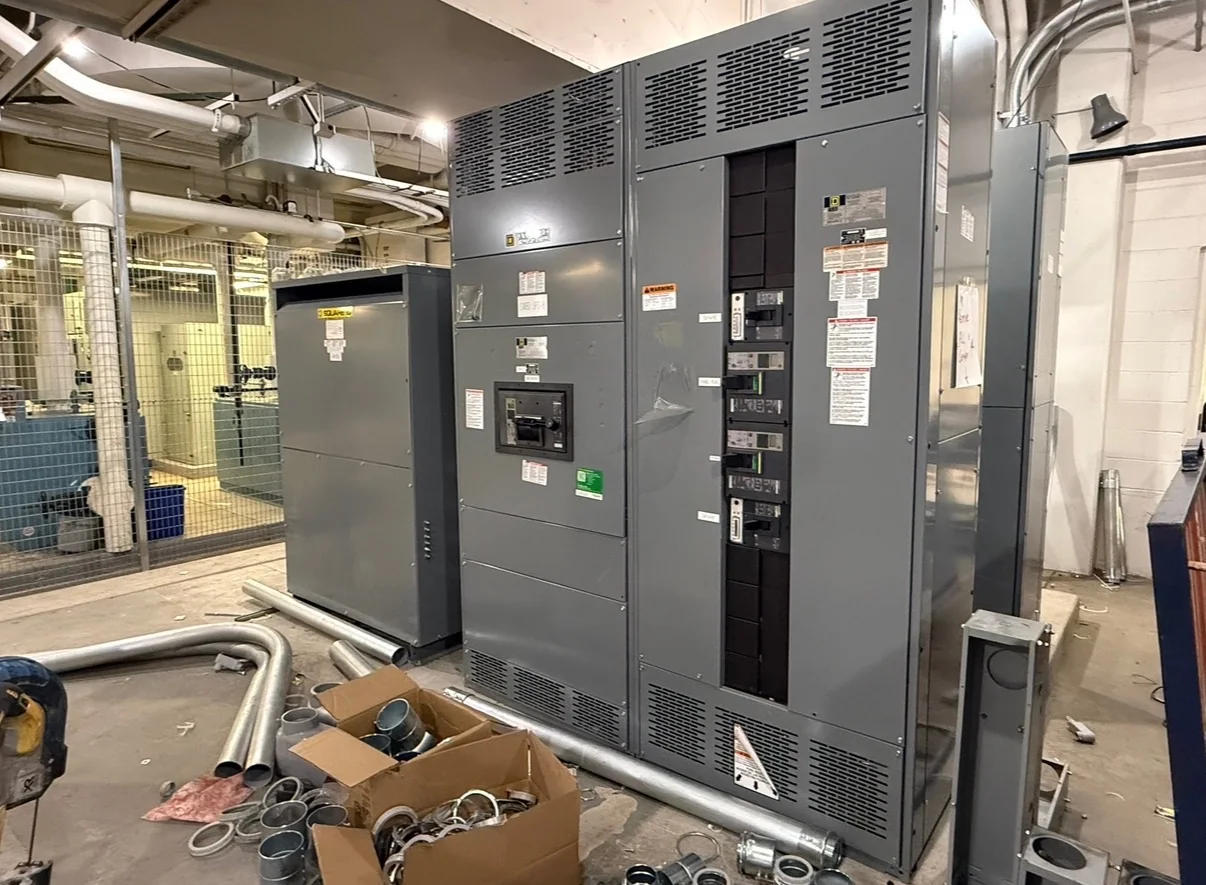
Define the Service Entrance Around the Utility Point of Connection
A service entrance switchboard sits at a critical boundary: it receives power from the serving utility and distributes it into a facility’s electrical system. For a Deer Park project, begin with the utility’s service requirements and the one-line diagram, not with a presumed standard lineup. Confirm the service voltage, available fault current, grounding arrangement, metering provisions, main-device configuration, and the loads the board must serve. These decisions affect equipment ratings, compartment layout, protection coordination, and the space reserved for incoming conductors. Ask the engineer and utility to resolve responsibility for service conductors and metering before drawings are finalized. A mismatch at this interface can delay review or require costly field changes. Exact requirements and equipment suitability are project-specific.
Match the Assembly to the Facility’s Load and Operating Plan
The right arrangement depends on how the site uses power, not simply on the building’s total square footage. Gather a current load schedule and identify large motors, process equipment, HVAC systems, future expansions, and loads that cannot tolerate an avoidable interruption. Engineers can use this information to develop feeder quantities, protective-device selections, spare provisions, and an operating sequence that fits the facility. In Deer Park’s industrial setting, a process-area addition may need to connect without disrupting unrelated operations; that affects how the distribution is divided and how tie points are considered. Do not assume a particular breaker frame, bus rating, or future-growth allowance without design review. Confirm the intended operating arrangement with the facility team before requesting a quote.


Review Fault Duty, Protection, and System Coordination
Available fault current and the protective-device scheme must be considered together. A switchboard’s short-circuit rating, main and feeder devices, and any proposed series rating need engineering review against the system study and upstream equipment. Protection coordination also matters: poorly matched settings can make an upstream device trip for a downstream fault, interrupting more of the facility than necessary. Provide the manufacturer with the relevant one-line diagram, utility fault-current information, transformer data, and device requirements when available. If these inputs are still being developed, identify them as open items rather than treating preliminary values as final. Final ratings and configurations depend on the project’s verified electrical conditions, applicable codes, and equipment evaluation; they should not be inferred from a nearby installation or a generic product description.
Plan for Gulf Coast Conditions and Physical Installation
Deer Park facilities may face heat, humidity, airborne contaminants, and demanding industrial service conditions, so the installation environment should be documented early. Specify the actual indoor or outdoor location, enclosure needs, ventilation constraints, exposure to corrosive substances, and any site requirements for access control or washdown. These details can influence enclosure construction, finish, equipment placement, and maintenance access; they do not establish a particular enclosure rating without review. Measure the route from unloading point to electrical room, including door clearances, turns, floor loading, overhead obstructions, and the space needed for final positioning. Confirm working clearances and cable approach with the project engineer. A lineup that fits on a drawing but cannot pass through the access route can create avoidable handling costs and schedule disruption.
Submit a Quote Package That Supports an Accurate Build
A useful request for quotation includes the one-line diagram, load and feeder schedules, project specifications, site conditions, and the required submittal process. Identify the service voltage and available fault-current basis, preferred or required device details, metering needs, conductor entry, enclosure conditions, and any requested standards or evaluation criteria. Mark deviations and unresolved selections clearly so the quotation does not imply decisions the engineer has not made. For low-voltage switchboard assemblies, UL 891 may be relevant when the specified assembly is appropriately evaluated; it should not be read as a blanket listing for other voltage classes or every configuration. The manufacturer can review the supplied scope and discuss a custom build using American components. Final compatibility, evaluation, and compliance remain specific to the design and project requirements.
Coordinate Submittals, Production Timing, and Deer Park Delivery
Schedule planning starts with approved drawings and complete technical inputs. Review the submittal schedule, engineer’s approval cycle, required factory documentation, and the date the site can accept equipment; changes after approval may affect production and delivery plans. Ask what information is needed to establish a project-specific schedule rather than relying on a general lead-time statement. Before shipment to Deer Park, coordinate the delivery window, receiving contact, unloading equipment, staging area, and route to the installation location. Industrial sites may require advance notice, gate procedures, escort arrangements, or limits on truck access, so verify requirements with the facility. Nationwide shipping is available, but delivery conditions and timing depend on the order and site. Keep the approved drawings and shipping details aligned to reduce receiving and installation surprises.