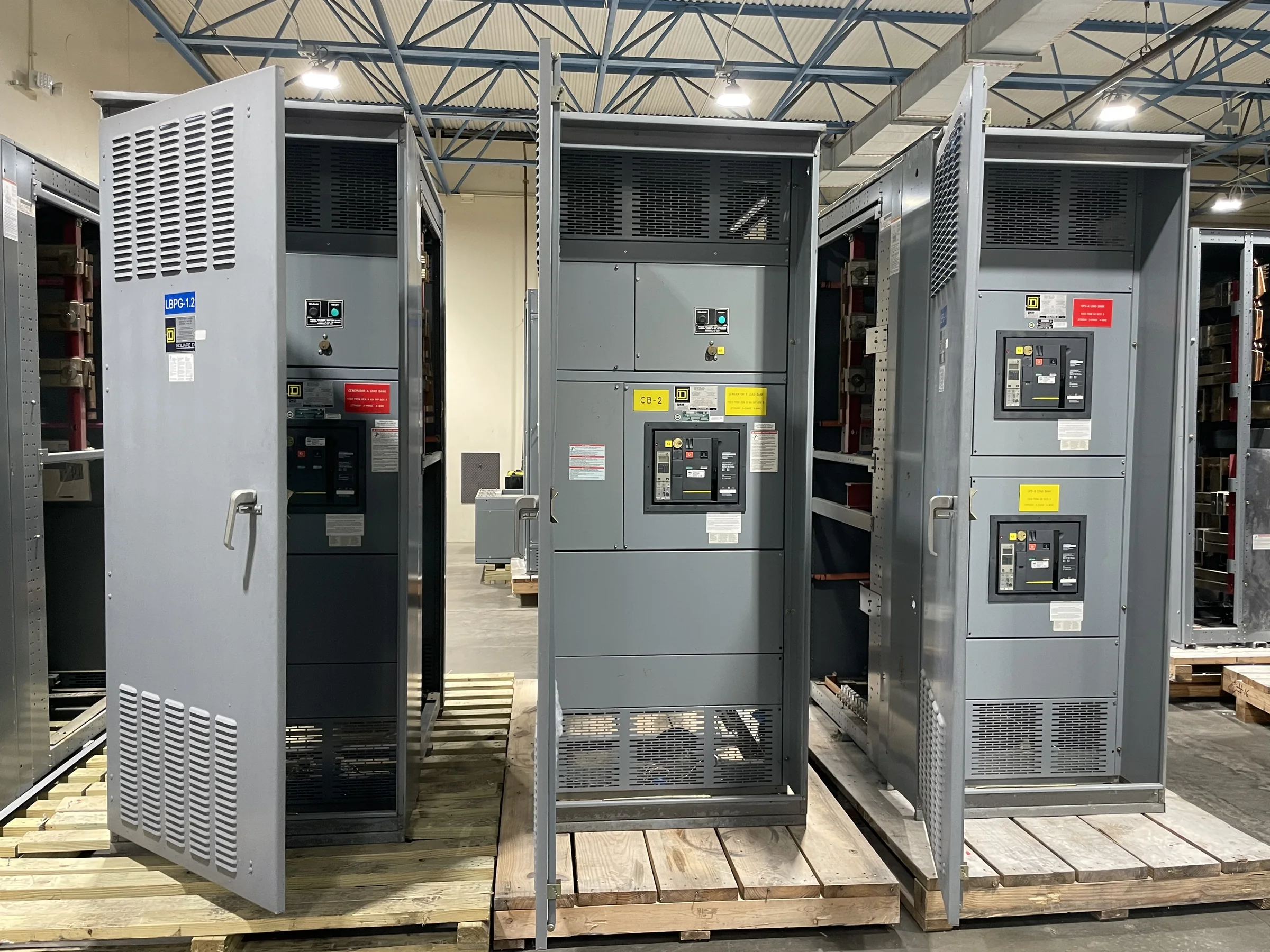
Define the Service Entrance Around the Utility Connection
A service entrance switchboard must fit the electrical service that will actually be delivered to the facility, not just the load estimate shown on an early budget drawing. For a Katy project, confirm the serving utility’s available service arrangement and obtain its current requirements before settling the switchboard layout. The engineer’s documents should identify system voltage, phase, frequency, service-entrance rating, available fault current, grounding method, and the location of the service point. Those details influence bus design, overcurrent protection, metering provisions, and the physical relationship between the switchboard and incoming conductors. Confirm who is responsible for utility coordination and approvals, since utility requirements and project specifications may not align automatically. Resolving differences early helps prevent drawing revisions, procurement delays, and costly changes to service conductors or equipment-room plans.
Coordinate Ratings, Protection, and Future Load Plans
Select ratings and protective devices from a coordinated engineering review rather than treating the switchboard as a collection of independently chosen components. The design team should evaluate present demand, anticipated additions, feeder loads, fault-current conditions, and the protective-device coordination approach required for the facility. A distribution plan for a warehouse, manufacturing operation, or commercial building can change as tenant spaces, process equipment, or charging loads are added; a credible expansion plan can therefore affect spare sections, breaker provisions, bus capacity, and enclosure dimensions. Do not assume a future breaker can be added simply because a section appears to have room. Confirm the intended device types and any restrictions with the manufacturer and engineer. Equipment ratings, compatibility, and code requirements are project-specific, and must be established from approved design documents rather than inferred from a product description.


Resolve Equipment-Room Fit Before Releasing Drawings
Switchboard dimensions are only one part of a workable installation: access, working space, conductor entry, removal paths, and the position of adjacent equipment can determine whether the room functions safely. In Katy-area projects, site plans may need to account for compact electrical rooms, active construction zones, or equipment receiving routes that pass through finished portions of a building. Provide the manufacturer with architectural room plans, structural constraints, cable or busway entry directions, and the location of doors, columns, trenches, and overhead obstructions. The electrical engineer and qualified installation team should verify required clearances and access under applicable codes and project documents. Check section arrangement and shipping-piece dimensions before construction fixes the room layout. Catching a door swing conflict or an obstructed termination area on drawings is far simpler than modifying walls or rerouting feeders after delivery.
Make Submittals Useful to Engineers and Procurement
A complete request for quotation gives the manufacturer enough information to identify exceptions and ask focused questions before a purchase order commits the project to a particular configuration. Include the one-line diagram, load and feeder schedules, service requirements, available fault-current information, protective-device specifications, metering needs, enclosure conditions, and the project’s applicable standards. Mark required options and identify any items that remain pending utility or engineer approval. Procurement teams should compare quotations against the same scope: a difference in included devices, metering provisions, terminations, or drawing milestones can make apparently similar prices difficult to evaluate. Ask what technical documents are included and when approval drawings will be issued; do not treat an unreviewed quotation as a final approved design. Clear submittal responsibilities help engineers review the equipment, purchasing staff control scope, and project teams identify unresolved decisions before fabrication planning begins.
Discuss Build Timing and Katy Delivery Conditions
Discuss required-on-site dates, drawing review, release for fabrication, and delivery access together; a requested ship date alone does not show whether the project schedule is achievable. Build timing depends on the final approved scope, component selection, drawing approvals, and current availability, so confirm the schedule for the specific configuration rather than relying on a general lead-time statement. For delivery to a Katy site, coordinate the receiving date with the construction manager, site access rules, unloading arrangements, and the electrical contractor’s installation sequence. Confirm who supplies appropriate lifting equipment and who is authorized to receive and inspect the shipment. Check truck access, gate restrictions, staging space, and whether the switchboard’s shipping sections can reach the room without an unplanned transfer. Nationwide shipping is available, but route, handling, site readiness, and delivery appointments remain project-specific details that should be settled before shipment.
Plan Installation Records, Acceptance, and Future Service
Before equipment arrives, align the installation team’s work with the approved drawings, equipment markings, project specifications, and the manufacturer’s supplied documentation. The engineer and qualified electrical contractor should confirm that field connections, grounding, protection settings, and any required inspections match the approved design and governing requirements. Keep final drawings, device information, approved settings, test records, and operating instructions with the facility’s electrical records; accurate documents matter when troubleshooting or evaluating later changes. Any inspection or testing must follow the applicable procedures and be performed by qualified personnel, with equipment de-energized whenever required—energized work is not a shortcut for a missed preparation step. A properly evaluated low-voltage switchboard assembly may be offered to applicable UL 891 requirements, but do not assume that every configuration carries a UL label. Confirm the exact evaluation, markings, and scope for the quoted assembly.