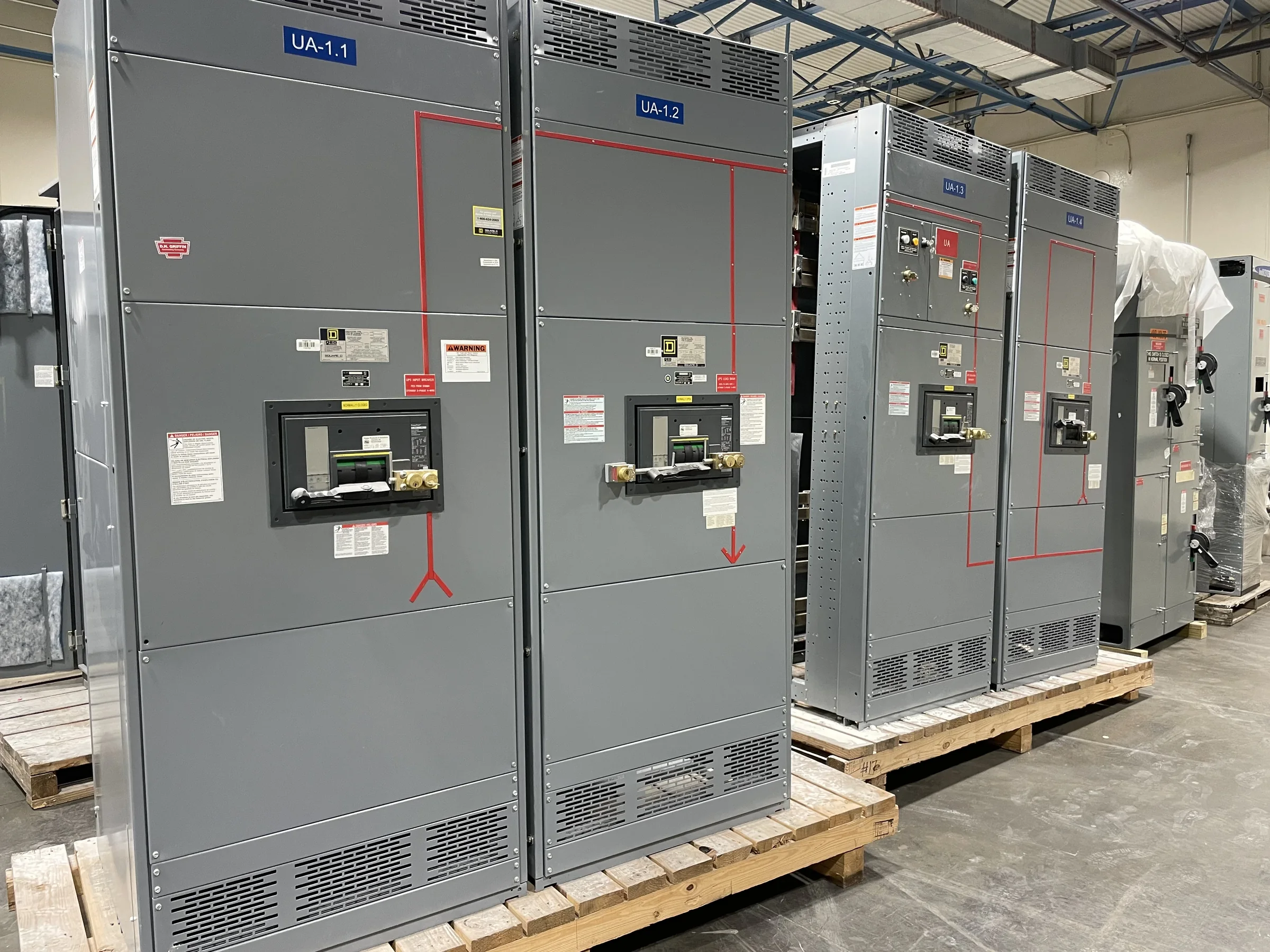
Define the Service Entrance Before Selecting the Switchboard
A service entrance switchboard sits at the point where utility service transitions into a facility’s distribution system, so its configuration must match both the serving utility’s requirements and the building’s electrical design. For a Pasadena, Texas project, establish the service voltage, phase, available fault current, required ampacity, metering arrangement, and grounding method before requesting a quote. Confirm whether the utility specifies a particular service section, CT compartment, access arrangement, or approved equipment layout; requirements can vary by provider and service location. These decisions affect the enclosure, bus arrangement, protective devices, and space needed for installation. Share the one-line diagram and utility service criteria with the manufacturer early. That gives the engineering review a reliable basis and helps identify mismatches before equipment details are finalized.
Coordinate Ratings, Protection, and Downstream Distribution
The switchboard’s main and feeder devices need to work as part of the facility’s complete protection scheme, not as isolated catalog selections. Provide the calculated load, anticipated demand, motor and other significant loads, feeder destinations, and available short-circuit information for engineering review. Ask the project engineer to confirm interrupting ratings, bus ratings, and protective-device coordination against the system study and applicable project requirements. A device with an unsuitable rating can compromise the intended protection or conflict with downstream equipment. Expansion plans also matter: spare sections, future feeder provisions, and physical room for later additions may affect the initial layout, but unused capacity should not be assumed without design review. Exact ratings, device options, and applicability depend on the project documents and equipment evaluation.


Plan the Enclosure Around Pasadena Site Conditions
Pasadena’s industrial setting can bring process dust, moisture, corrosive exposure, vibration, or elevated ambient temperatures, depending on the specific site. Identify the actual installation environment rather than selecting an enclosure from the city name alone. Indoor electrical rooms, outdoor service locations, and areas near process equipment can call for different enclosure construction and environmental protection. Review drainage, washdown practices, ventilation, sunlight exposure, and nearby chemical processes with the design team. Temperature and ventilation also deserve attention because operating conditions may affect equipment application and allowable loading. Document the installation location and any known hazards, then have qualified engineering personnel determine suitable construction and clearances. This avoids treating an enclosure rating or material choice as universal and helps keep the switchboard aligned with site conditions.
Resolve Working Space, Access, and Physical Fit
A switchboard can meet its electrical design intent and still create installation problems if the room or service area cannot accommodate it. Verify the equipment footprint, section lineup, working clearances, door and cover access, cable entry, conduit routes, and available bending space against current architectural and electrical drawings. Check the route from the delivery point to the final position, including door widths, turns, floor capacity, overhead obstructions, and any limits on lifting or staging. In an operating Pasadena facility, access may also be constrained by adjacent production equipment or scheduled shutdown windows. Resolve those conditions before releasing the layout for fabrication. Field measurements and coordinated drawings are especially useful when replacing existing gear, because existing walls, conduits, and cable lengths may not match older records.
Prepare Documents for an Accurate Quote and Build
A useful quote package gives the manufacturer enough information to price the intended equipment without relying on assumptions. Include the one-line diagram, load and fault-current data, utility service requirements, equipment schedule, required standards, metering details, preferred manufacturer or device constraints, and relevant site drawings. Identify whether the project calls for a new service entrance, replacement switchboard, or coordinated retrofit, and note any interfaces with existing transformers, generators, transfer equipment, or downstream panels. Flag submittal deadlines and required review documents so procurement can compare proposals on scope as well as price. The U.S. manufacturer can discuss custom builds, American components, and available timing, but final construction, compliance, and delivery depend on project-specific review. Confirm exclusions, documentation, and approved deviations before placing an order.
Coordinate Delivery, Installation, and Acceptance
Delivery planning should follow the approved equipment layout and the actual site’s receiving conditions, not a generic arrival estimate. Confirm the shipping destination, receiving hours, unloading equipment, staging space, weather protection, and who will inspect the shipment for visible damage or missing sections. For Pasadena projects near active industrial operations, coordinate truck access and delivery timing with facility rules, security procedures, and any production or construction restrictions. Keep the installation contractor, electrical engineer, utility, and facility representative aligned on shutdown planning and required inspections. Installation and service work must be performed by qualified personnel under applicable safety procedures; equipment must be de-energized before work begins, with safe conditions verified. Before energization, complete the project’s required inspections and checks, and resolve open documentation or field-fit issues through the responsible engineering team.