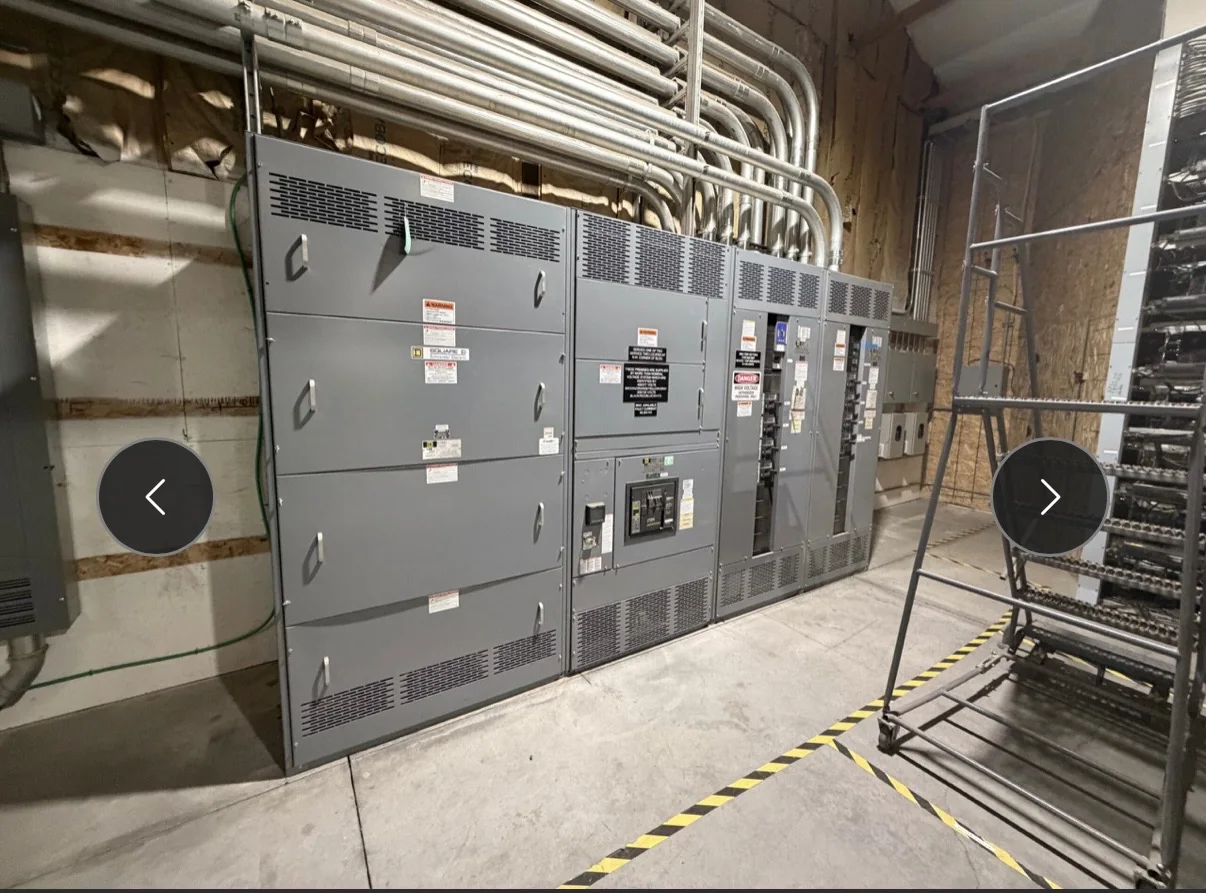
Define the Service Entrance Around the Utility Point of Connection
A service-entrance switchboard sits where utility power enters a facility, so its arrangement must reflect the serving utility’s requirements and the building’s electrical design. For a Sugar Land project, confirm the point of delivery, service voltage, available fault current, grounding method, metering arrangement, and whether the utility requires a particular service section or access provision. These details influence bus ratings, protective-device selection, compartment layout, and the information needed for a complete quotation. Do not rely on an existing nameplate alone when planning a replacement; utility conditions and connected loads may have changed. Provide current one-line diagrams, utility correspondence, and site photographs where available. The manufacturer can use this project information to develop a new assembly proposal, with final applicability verified by the project engineer and utility.
Match the Switchboard Layout to Loads and Expansion Plans
Start with a documented load schedule rather than selecting a switchboard by its former capacity. Identify present demand, major motor loads, essential systems, spare feeders, and credible near-term additions; then have the responsible engineer establish the required ratings and protection. In Sugar Land, a facility may combine offices, process equipment, HVAC, pumps, or tenant loads, each with different operating priorities and starting characteristics. The arrangement of mains, distribution sections, and feeder devices affects coordination, maintainability, and future modifications. Leave room for practical expansion only when the electrical design and available fault-current evaluation support it. Include feeder descriptions and preferred device configurations in the request for quote, while treating all ratings and device compatibility as project-specific. A clear load basis reduces redesign and helps procurement compare technically equivalent proposals.


Resolve Ratings, Protection, and Applicable Standards Before Release
A service-entrance assembly must be evaluated as a complete system, not treated as a collection of individually suitable components. Confirm the required voltage, continuous-current rating, short-circuit withstand or interrupting requirements, enclosure construction, grounding and bonding details, and protective-device coordination with the design team. Applicable standards depend on equipment type and scope; UL 891 applies to appropriately evaluated low-voltage switchboard assemblies, not automatically to medium- or high-voltage gear or every product configuration. Ask the manufacturer to identify the proposed assembly basis and supporting documentation for the specific design. Available fault current, upstream protection, and utility requirements can affect what is acceptable, so resolve them before issuing a purchase order. Avoid assuming a replacement inherits an earlier rating or listing; confirm compatibility and evaluation for the actual project.
Plan a Replacement Without Underestimating the Outage
Replacing service equipment is often constrained more by the outage window and transition plan than by the equipment footprint. Establish which loads can be shut down, which require temporary power, who controls the utility disconnect, and how the contractor will verify the installation before energization. Work on electrical equipment must be performed under the applicable safety procedures, with equipment de-energized when required; schedule coordination does not make energized work optional. For an occupied Sugar Land facility, coordinate building operations, tenants, security, and critical-process owners early enough to agree on notifications and restart priorities. Share existing drawings, photographs, cable-entry locations, and access restrictions during design review. Those records help identify field conditions that could affect section arrangement or installation scope, but a site survey and contractor verification remain important before finalizing the replacement plan.
Coordinate Enclosure, Access, and Delivery at the Sugar Land Site
A switchboard that fits the electrical design can still create installation problems if the room, route, or receiving plan is overlooked. Confirm available floor space, working clearances, door swing, ceiling height, conduit entry, anchorage, and the path from the delivery point to the electrical room. Sugar Land sites may have tight service yards, controlled gates, shared loading areas, or schedules that restrict truck access; verify actual conditions with facility staff rather than assuming a standard delivery route. Provide delivery hours, unloading arrangements, site contact, and any packaging or staging constraints when requesting a quote. Nationwide shipping and short lead times may be available as manufacturer offerings, but timing and transportation arrangements are project-specific and should be confirmed in writing. Match shipping sections and handling plans to the building route and approved layout.
Build a Complete Procurement Package for a Reliable Proposal
A useful request for quote gives engineering and procurement enough information to compare scope, not just headline price. Include the one-line diagram, load and feeder schedules, utility requirements, project specifications, preferred device details, enclosure conditions, site location, required submittal dates, and anticipated delivery window. Identify whether the scope includes drawings, nameplates, documentation, or coordination with other project parties, and list any deviations that require review. Ask for a proposed configuration and clearly marked exceptions so the team can resolve gaps before release. A U.S. manufacturer can discuss custom-built equipment, American components, timing, and nationwide delivery against the project’s actual requirements; none should be treated as a guaranteed configuration or schedule without confirmation. For Sugar Land work, align purchasing dates with outage planning, contractor readiness, and receiving access. Final ratings, standards, compatibility, and availability require project-specific review.