Define the Service Entrance Around the Utility and Load
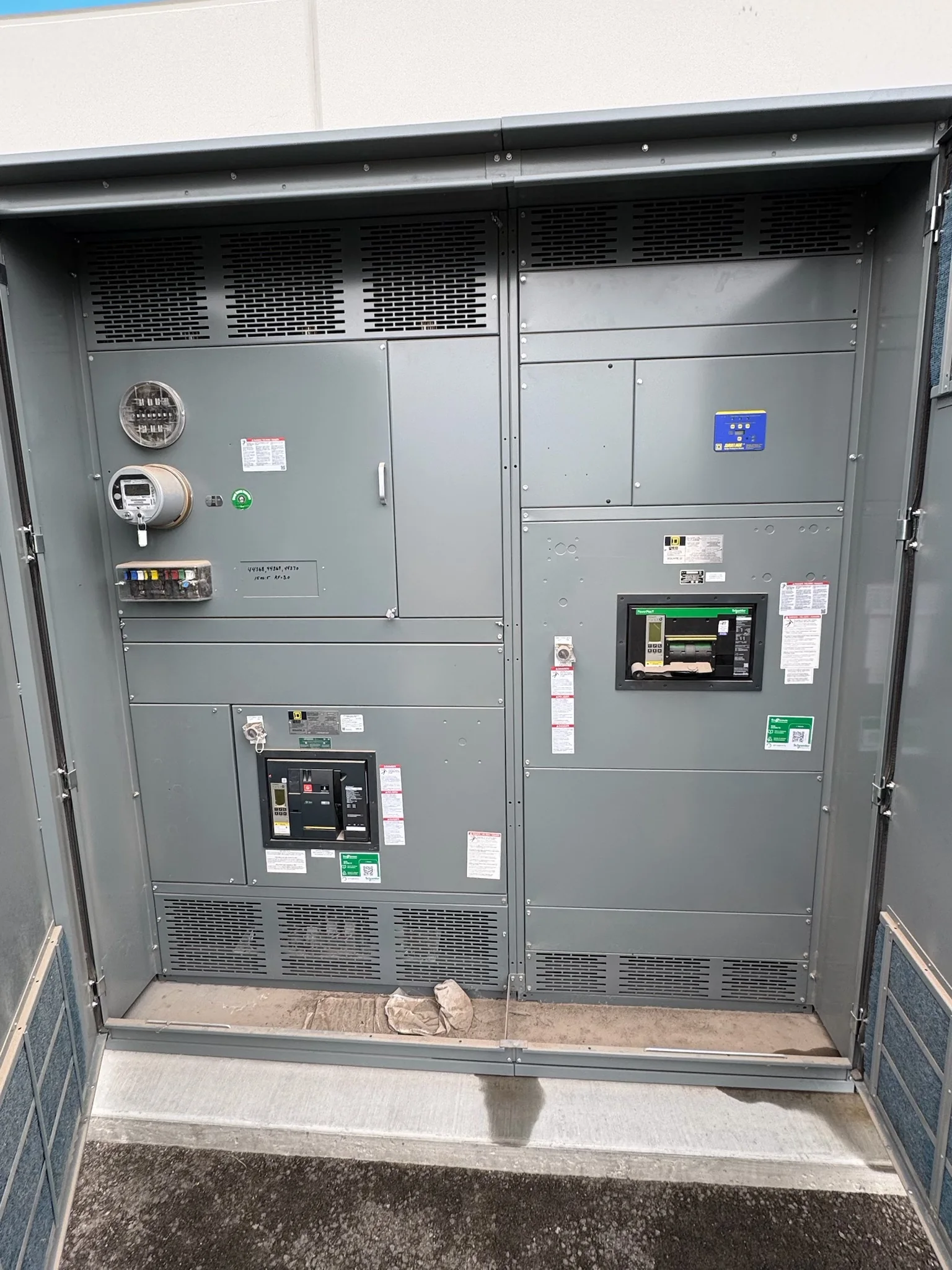
A service entrance switchboard has to suit the available utility service, the building’s distribution plan, and the loads it will support—not simply match the ampere rating of an existing lineup. For a project in The Woodlands, confirm service voltage, phase, frequency, available fault current, grounding arrangement, and the utility’s metering and service requirements before requesting a quote. These details affect the main device, bus arrangement, metering provisions, and equipment configuration. A new building may have room to plan the service and feeder sections together; a replacement project may be constrained by existing conduits and downstream panels. Share load schedules, one-line diagrams, and utility criteria early. Final ratings, protective-device selection, and compliance requirements must be confirmed for the specific installation.
Choose a Layout That Supports Operation and Future Work
The arrangement of the main section, metering, distribution devices, and cable access influences how the switchboard can be installed, operated, and maintained. A layout that looks compact on a drawing may leave too little room for conductor bending, terminations, or safe access once installed. During design review, compare the proposed lineup with the electrical-room plan, wall openings, overhead services, and the direction feeders must enter or leave. Consider whether future circuits or planned building loads call for spare space or a practical expansion path; unused capacity should be specified rather than assumed. For facilities in The Woodlands, reviewing equipment access alongside room dimensions can help avoid late changes when a new switchboard must pass through existing doors, corridors, or loading areas.


Coordinate Ratings, Protection, and Equipment Interfaces
Protective devices and bus ratings need to be coordinated with the service conditions and downstream equipment. Provide the engineer’s short-circuit and coordination information where available, along with feeder data, connected loads, and any selective-coordination or arc-energy objectives applicable to the project. The design team can then evaluate device types, trip functions, interrupting ratings, and settings against the actual system. Do not infer compatibility from a nameplate or from the appearance of an older switchboard: replacement equipment may require changes to conductors, transition sections, mounting, or protection studies. If the project includes an existing generator, transfer equipment, or parallel sources, document those interfaces as well. Final selections and settings depend on project-specific engineering review and the applicable authority and utility requirements.
Plan Replacement Work and Safe Installation Conditions
Replacing service equipment is a sequencing challenge as much as an equipment-selection task. Existing loads may depend on the switchboard continuously, while the work requires a planned outage, approved isolation, and verification that equipment is de-energized before work begins. Identify which loads are critical, whether temporary service is being considered, who controls the outage, and how the utility connection will be coordinated. These decisions belong in the project plan; they should not be treated as details to resolve after delivery. Record existing conductor sizes and entry locations, but have qualified project personnel verify field conditions before finalizing interfaces. In occupied facilities around The Woodlands, coordination with building operations and contractors can reduce disruption, while the installation method remains subject to the approved design and site safety procedures.
Submit Complete Documents for a More Useful Quote
A clear request for quotation gives the manufacturer a sound basis to assess the requested build and identify open questions. Include the one-line diagram, equipment schedule, service and bus ratings, main-device requirements, metering criteria, enclosure and access needs, cable-entry details, and relevant project specifications. Attach room drawings and note any dimensional limits or unusual handling constraints. State the requested standards and evaluation requirements precisely; UL 891 applies to appropriately evaluated low-voltage switchboard assemblies and is not a blanket certification for medium- or high-voltage equipment. Also identify what is required with the order, such as approval drawings, wiring information, or operation and maintenance documentation. Complete inputs help reveal scope gaps sooner, though final configuration, applicable standards, and availability remain project-specific.
Match Delivery Planning to the Woodlands Site
Nationwide shipping can support a project in The Woodlands, but delivery planning still depends on the destination and the equipment configuration. Before placing an order, confirm the receiving address, site contact, delivery hours, truck access, unloading responsibility, and whether the route to the electrical room includes restrictive doors or turns. Ask the project team to check floor access and handling arrangements against the proposed shipping sections and dimensions; a lineup that cannot reach its intended room can delay installation even when it arrives as planned. Discuss schedule needs and approval milestones with the manufacturer early, since custom configurations and component availability affect timing and should not be assumed. Confirm packaging, shipment details, and receipt inspection responsibilities in the purchase documents before release.