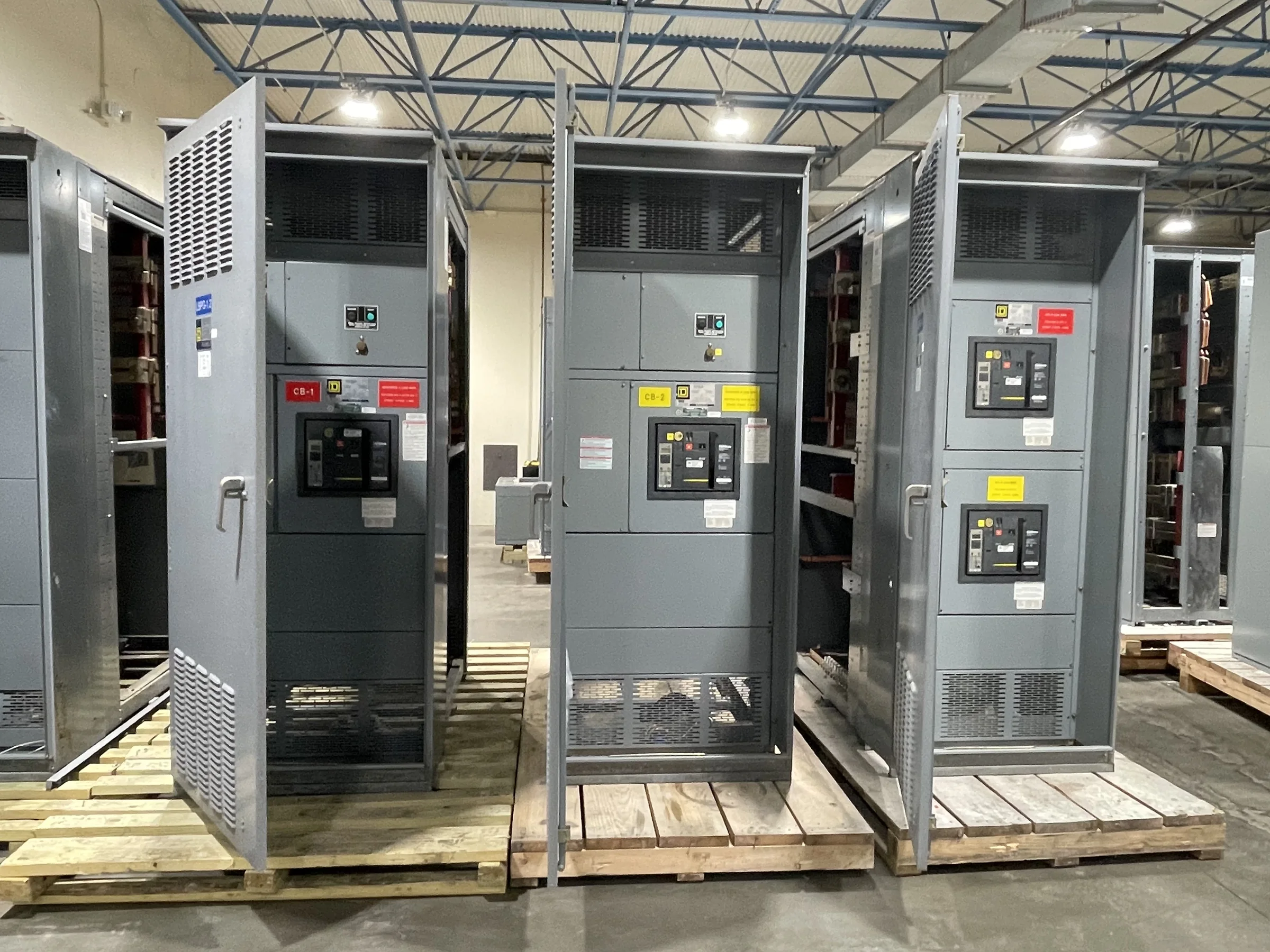
Fabrication Starts With the Electrical Basis of Design
A fabrication package should begin with the system the equipment must serve, not a cabinet outline alone. Confirm the one-line diagram, nominal voltage, phase and wire arrangement, frequency, available fault current, grounding method, and intended service entrance or distribution role. These details shape bus configuration, protective-device selection, compartment arrangement, and the information needed to evaluate the assembly. Identify whether the project calls for a low-voltage switchboard assembly that may be evaluated to UL 891; that standard is not a blanket qualification for medium- or high-voltage equipment. A manufacturer can review the supplied criteria and flag gaps before design release. Resolving conflicting drawings or incomplete electrical data early helps prevent late changes to the equipment scope, interfaces, and approval schedule.
Coordinate Ratings, Devices, and System Interfaces
The selected equipment must fit both the electrical system and the devices that connect to it. Procurement documents should state required continuous-current and short-circuit ratings, protective functions, metering, control power, and any specified manufacturer or approved-equivalent rules. Those requirements need to be checked against the available fault-current study, upstream protection, downstream loads, and coordination objectives; a familiar breaker name or frame size alone does not establish suitability. Confirm cable or bus connections, incoming and outgoing arrangements, and whether provisions are needed for future circuits. Where existing equipment remains in service, document its actual configuration and interface points rather than relying only on an old drawing. Compatibility and final ratings remain project-specific and should be resolved through engineering review before fabrication.


Turn Drawings Into a Reviewable Submittal
Clear submittals let engineers and facility teams verify what will arrive before manufacturing proceeds. A useful review package can include equipment elevations, general arrangement, one-line and schematic diagrams, connection details, nameplate information, device schedules, and bill-of-material data as applicable to the project. Mark the drawing status and identify assumptions, exclusions, and customer-furnished items so reviewers can distinguish confirmed requirements from open decisions. Check room dimensions, access paths, cable entry locations, conduit windows, and working-space needs against current architectural and electrical drawings. One missed door swing or cable approach can force costly field revisions even when the electrical design is sound. Set a documented approval process with named reviewers and a target return date; fabrication release should follow the required project approvals.
Plan Around Site Conditions and Replacement Work
The installation environment influences enclosure arrangement, materials, access, and maintenance planning. Document indoor or outdoor placement, ambient conditions, dust or moisture exposure, corrosive agents, vibration, elevation, and any washdown or housekeeping practices that affect the location. These conditions do not automatically determine an enclosure rating; the project team must specify the applicable requirements and confirm the proposed construction against them. For a replacement, record the existing lineup dimensions, mounting and anchorage, bus and cable interfaces, conduit locations, and equipment that will remain. Verify removal and rigging routes, door and aisle clearances, floor capacity, and the outage window with site personnel. Early field verification matters because a factory-built section cannot solve an unmeasured obstruction or incompatible connection after delivery.

Align Schedule Expectations With Approval Milestones
Project timing is more useful when it is discussed as a sequence of decisions than as an unsupported delivery promise. Identify when the manufacturer needs complete electrical data, when submittals will be reviewed, what approvals are required for release, and how revisions or late device changes affect the plan. Ask for a project-specific schedule and clarify whether it covers engineering, fabrication, inspection, shipment, or only selected milestones. Long-lead components and custom arrangements may influence timing, but availability must be confirmed for the actual bill of materials. Establish who can approve substitutions and how proposed changes will be documented; an unreviewed substitution can affect coordination, dimensions, controls, or maintenance procedures. For critical facilities, coordinate outage planning and commissioning resources separately from equipment production so the site is ready when the lineup arrives.
Coordinate Shipping, Receiving, and Closeout Records
Nationwide shipment still requires project-level delivery planning. Confirm the receiving address, site access restrictions, delivery hours, unloading equipment, staging area, and whether the equipment must arrive in sections to suit the route into the electrical room. Protect the planned delivery date from conflicts with construction sequencing, storage limitations, and the availability of qualified installation personnel. Before shipment, agree on the documents needed for receiving and turnover, such as approved drawings, wiring diagrams, component information, operating and maintenance materials, and applicable test or inspection records. The exact package depends on the specified assembly and contract requirements; do not assume every record or label applies to every product. At receipt, compare the shipment with the approved configuration and document damage or discrepancies promptly for resolution.