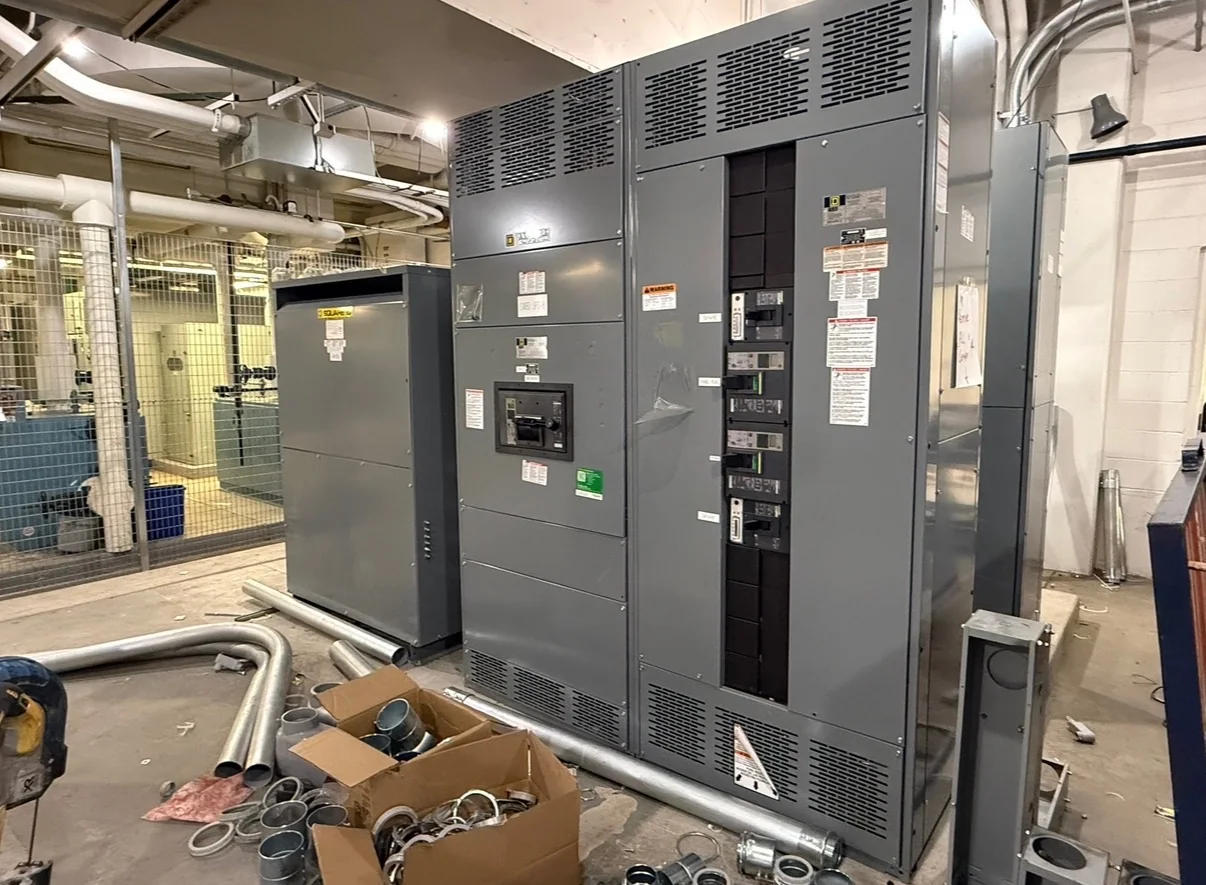
What an Interrupting Rating Tells You
An interrupting rating describes the maximum prospective short-circuit current a protective device is designed to interrupt safely at a specified voltage under stated conditions. It is not the same as the switchgear’s continuous current rating, which addresses normal load, or its short-time withstand rating, which concerns a separate ability to carry fault current for a defined interval. Confusing these values can lead to equipment that appears adequate on a one-line diagram but cannot safely clear the available fault current at its installation point. For procurement, identify the exact device and assembly being evaluated, the applicable voltage, and the rating basis shown in project documents. Confirm the relevant nameplate and manufacturer documentation; do not infer interrupting capability from cabinet size or bus ampacity.
Compare the Rating With Available Fault Current
The central engineering check is whether the equipment’s applicable short-circuit rating is suitable for the available fault current at its specific point in the system. That value depends on the source, transformer characteristics, conductors, and upstream system configuration, so it should come from a qualified short-circuit study or other project-approved engineering basis—not an assumed utility value. Fault current can differ between service equipment and downstream distribution sections, and system changes may alter the calculation. Ask the design team to identify the study revision, calculation location, and assumptions used for the proposed lineup. Then have the manufacturer review the requested equipment configuration against those project requirements. If the study is missing, outdated, or unclear, resolve that gap before finalizing the order rather than relying on a general catalog rating.


Understand Device Ratings and Assembly Ratings
A protective device’s interrupting rating does not automatically establish the short-circuit rating of the complete switchboard or switchgear assembly. The assembly may have a marked short-circuit current rating based on its evaluated construction and the specified protective device or combination of devices. That distinction matters when a design depends on a tested series combination, current-limiting fuse, or other conditional arrangement: substitutions can change whether the documented rating applies. Submittals should identify the assembly rating, the main and feeder devices, and any conditions required for the stated value. For low-voltage switchboard assemblies, UL 891 may be relevant when the equipment is appropriately evaluated to that standard; it is not a blanket certification for every product or for medium- or high-voltage equipment. Confirm exact evaluation and labeling requirements for the project.
Coordinate Protection, Selectivity, and Ratings
Selecting equipment for available fault current is only part of a protection review. Engineers may also need to evaluate how breakers or fuses coordinate, whether selective operation is required, and what clearing times are acceptable for the system and connected loads. A higher interrupting rating by itself does not establish that the protective scheme will isolate a fault in the desired way. Coordination settings, device types, and approved combinations should be checked against the study and equipment documentation, especially when a project specifies selective coordination or has critical loads. Provide the manufacturer with the protection schedule and relevant one-line diagrams, and flag requirements that depend on particular devices or settings. Any proposed substitution should receive engineering review; a seemingly equivalent device can affect both fault interruption capability and the intended coordination.
Make the Specification and Submittal Review Useful
A clear request for quotation helps prevent rating assumptions from surfacing after equipment is built. Include the system voltage, bus and feeder requirements, available fault current at the lineup, the study basis or revision, protective-device schedule, and any required assembly marking or evaluation. Identify the installation environment and constraints that affect construction, such as indoor or outdoor placement, room access, cable entry, conduit locations, and equipment dimensions. Request drawings and rating documentation for the proposed configuration, then compare them with the one-line diagram, specifications, and coordination study before approval. If information is pending, state that explicitly and identify who will resolve it. A U.S. manufacturer can build new equipment around project requirements, but exact ratings, compatibility, standards, and availability must be confirmed for the specific design.
Plan Delivery Around Installation Readiness
Delivery planning matters because a correctly rated lineup still creates project risk if it arrives before the site can receive and install it. Confirm the shipping route, unloading method, receiving hours, storage conditions, access clearances, and whether the equipment must move through doors, corridors, or elevators. Coordinate shipment timing with room readiness, foundations, conduit work, and the contractor’s installation sequence; custom construction and delivery schedules are project-specific, not guaranteed by a general lead-time statement. Before release, reconcile approved drawings with field dimensions and check that the receiving team has the documents needed to identify sections and handle them as specified. Installation, inspection, and energization must follow approved procedures and be performed by qualified personnel. Keep final ratings, device details, and approved changes in the turnover record for future maintenance and system updates.