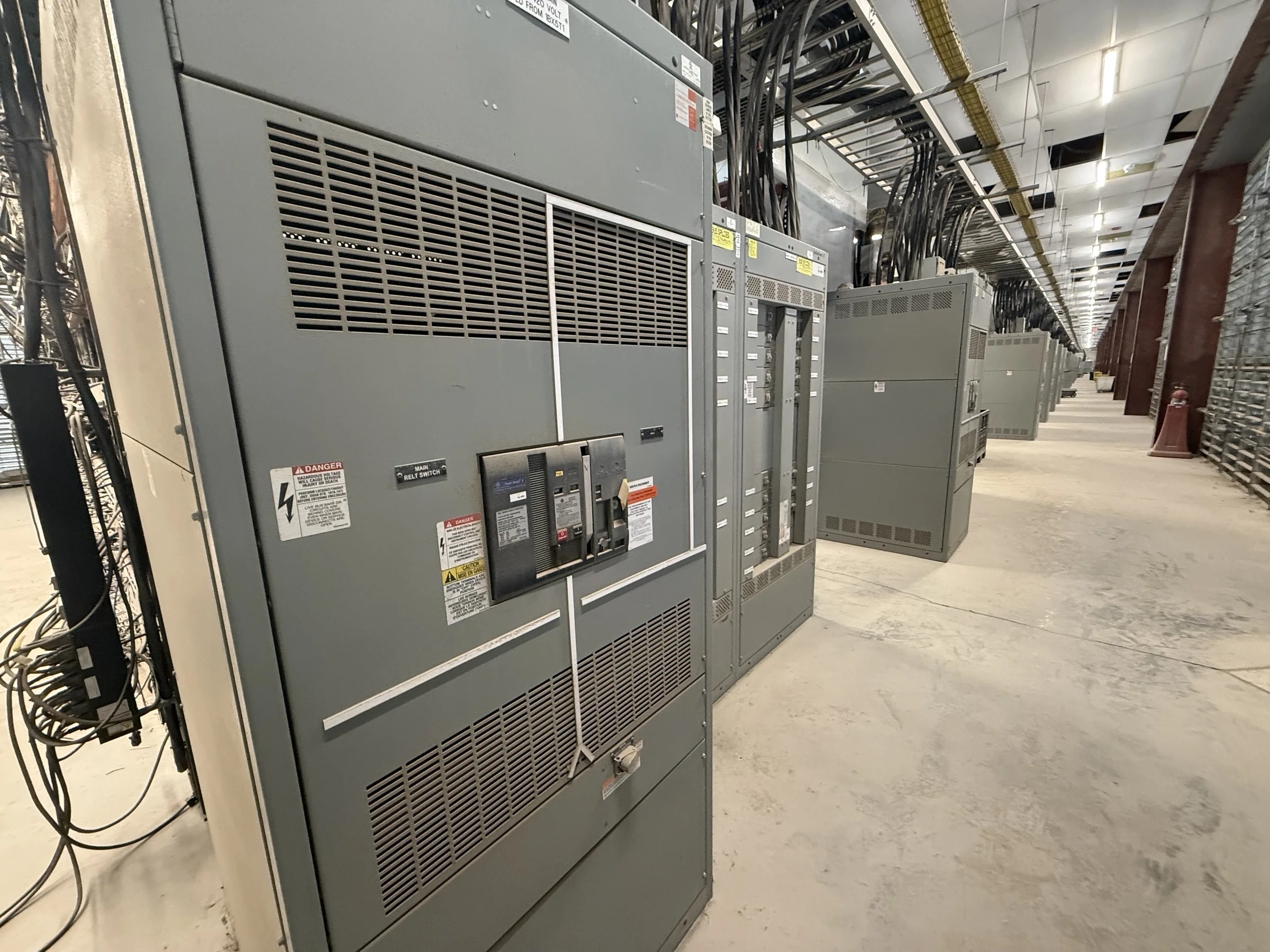
Define the Replacement Scope Before Selecting Equipment
A switchgear replacement in Sugar Land begins with understanding what the existing equipment does and what the project must preserve. Document the service voltage, available fault-current information, continuous load, feeder arrangement, protective-device functions, grounding method, and connection points before comparing proposals. These details influence the required assembly and help prevent a new lineup from conflicting with upstream protection or downstream distribution. Record equipment nameplates, one-line diagrams, control schematics, and breaker settings where available; flag any missing or inconsistent information for engineering review. A manufacturer can build new equipment to project requirements, but the final configuration and ratings depend on verified system data and applicable evaluation. Establishing the scope early also helps procurement distinguish replacement of an entire assembly from a defined retrofit or tie-in.
Translate Existing Conditions Into a Buildable Specification
A specification should describe both the electrical duty and the physical conditions the replacement must fit. Confirm lineup dimensions, aisle and working-space constraints, cable entry direction, conduit locations, bus connections, room access, and the route from the delivery point to the installation area. In Sugar Land facilities, a building addition, tenant change, or tightly occupied electrical room may leave little room for staging or equipment movement; verify these conditions rather than relying on old drawings alone. Identify required metering, protective relays, control power, communications, and interlocks, along with any owner standards or utility interface requirements. List the documents needed for review, such as outline drawings, elementary diagrams, bills of material, and equipment data. Clear acceptance criteria reduce late revisions and help the manufacturer price the intended scope.


Review Ratings, Protection, and Equipment Standards
Replacement decisions should account for system conditions, not simply repeat the labels on aging gear. Engineering review should verify voltage class, current rating, short-circuit duty, bus configuration, enclosure requirements, and protective-device coordination against the actual installation. Confirm how the new equipment will interface with transformers, generators, transfer equipment, motors, and downstream panels; changes in load or fault contribution can affect device selection and settings. For low-voltage switchboard assemblies, UL 891 may be relevant when the assembly is appropriately evaluated for that standard. It is not a blanket certification for medium- or high-voltage equipment, and a standard reference alone does not establish that a particular unit carries a UL label. Put required ratings, standards, listing expectations, and exceptions in the project documents for confirmation.
Plan Outage Windows and Replacement Sequencing
The installation plan often governs procurement choices as much as the electrical design. Identify the loads that cannot be interrupted, available shutdown windows, temporary power needs, and the sequence for isolating, removing, setting, connecting, and commissioning the replacement. Electrical work must be performed under the applicable safety procedures, with equipment de-energized when required; schedule assumptions should never treat energized work as a shortcut. Coordinate the planned outage with facility operations, contractors, utility representatives where applicable, and any tenants whose service depends on the affected lineup. If the scope includes staged construction or temporary distribution, define responsibilities and interfaces in advance. A realistic sequence gives the manufacturer and installation team a clearer basis for drawings, connection planning, and delivery coordination, while reducing avoidable surprises during a limited outage.
Coordinate Manufacturing Documents, Procurement, and Timing
Before releasing a purchase order, align the commercial scope with the technical submittal and approval process. State the required equipment configuration, project-specific options, owner-furnished components, installation boundaries, and documentation expectations. Review drawing approval dates, revision responsibility, and the effect of requested changes on the production schedule. A U.S. manufacturer offering custom builds and American components can discuss the requested design and sourcing approach, but exact component availability and timing depend on the approved scope and current project conditions. Ask for a schedule tied to defined milestones rather than assuming a general short-lead-time statement guarantees a delivery date. Resolve open items such as breaker interfaces, cable termination details, and communication protocols early; unresolved decisions can affect manufacturing release, field preparation, and coordination with other contractors.
Arrange Delivery and Closeout for the Sugar Land Site
Delivery planning should connect the approved equipment drawings to conditions at the Sugar Land facility. Confirm receiving hours, truck access, unloading equipment, doorway and corridor clearances, floor loading limits, indoor staging space, and protection from weather or construction activity. Coordinate the shipment with the site contact and installation contractor so equipment does not arrive before the room is ready or after a critical outage window. Nationwide shipping is an available offering, while routing, shipment configuration, and arrival timing remain project-specific. Before installation, verify that the delivered lineup matches approved submittals and that required accessories and documents are present. Closeout planning should identify the records the owner needs, such as final drawings, device information, operating materials, and test documentation where applicable. Organized handoff supports maintenance and future troubleshooting.