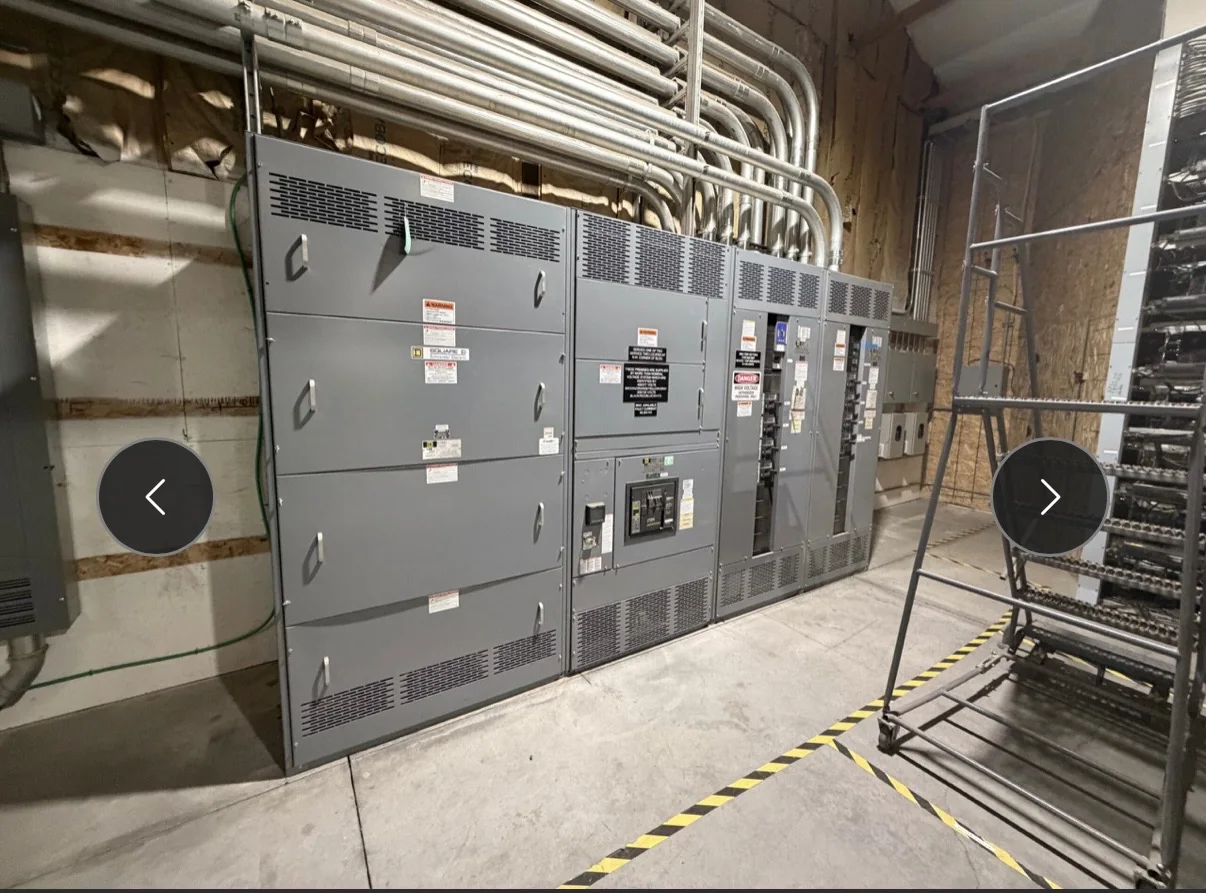
Define the Modernization Scope Before Selecting Equipment
A Houston switchgear modernization project can range from replacing a complete distribution lineup to coordinating new equipment with selected portions of an existing system. Start by documenting the equipment’s function, voltage class, ratings, protective devices, available fault-current information, and connections to upstream and downstream gear. Record the manufacturer and model where identifiable, but verify nameplate data against drawings and field conditions; records may be incomplete or may not reflect later changes. Clarify whether the project addresses capacity, reliability, maintainability, obsolete components, or a planned facility expansion. These objectives affect the equipment configuration and what must remain compatible. A U.S. manufacturer can develop new equipment around defined project requirements, but exact design, ratings, standards, and applicability require engineering review. A thorough scope reduces late revisions and helps procurement compare proposals on equivalent terms.
Gather Field Information That Can Change the Design
Dimensions and connection details can determine whether proposed switchgear is practical long before manufacturing begins. Have qualified personnel document the available room, access doors, corridors, floor elevations, housekeeping pads, overhead obstructions, cable-entry paths, bus connections, and the space needed to operate and maintain the equipment. Check whether existing conduit or bus duct positions can be reused, altered, or must remain untouched. In Houston facilities, outdoor exposure, humidity, heat, and airborne contaminants may influence enclosure and environmental requirements, depending on the installation location. Do not assume one enclosure or ventilation arrangement fits every site. Photographs, measured sketches, equipment schedules, and existing one-line diagrams help identify conflicts early. Confirm dimensions and conditions through project-specific review; site details should be verified, not inferred from an old drawing or a catalog outline.


Coordinate Electrical Ratings and System Interfaces
Modernization is not simply a matter of matching the old lineup’s nameplate. The design team should establish system voltage, continuous-current needs, short-circuit duty, grounding arrangement, protective-device functions, metering, control power, and required incoming and outgoing connections. Confirm available fault current and protection coordination using appropriate project data; changes elsewhere in the system can affect equipment duty and settings. Review interfaces with transformers, generators, utility service, transfer equipment, motors, and building-management or supervisory systems where applicable. Existing cable sizes, termination space, phase arrangement, and bus orientation may constrain a replacement. Provide current one-line diagrams, load information, and protection requirements for review, and identify assumptions that need confirmation. Final suitability depends on the application and engineering evaluation. Never treat a prior rating or an adjacent equipment label as proof that a new configuration is appropriate.
Plan Replacement Work Around Facility Operations
A new lineup may be designed to fit a tight room, yet replacement can still be difficult if the facility cannot accommodate outages, temporary distribution, or equipment movement. Identify which loads are critical, when shutdowns are permissible, who controls switching, and what operational approvals are required. Develop outage and transition planning with the facility’s qualified electrical personnel; do not treat energized work as a shortcut to avoid downtime. Check rigging access, floor loading, lifting points, staging space, delivery sequence, and whether equipment sections can pass through the route to the electrical room. Houston-area sites may also need to coordinate deliveries around active industrial operations, construction traffic, weather exposure, and restricted receiving windows. These conditions are site-specific. Early coordination lets the team evaluate practical sequencing and communicate constraints before equipment configuration and shipping arrangements are finalized.
Prepare a Complete Quote and Submittal Package
A useful request for quotation gives the manufacturer enough information to identify the application without leaving important design choices hidden. Include the project location, scope, system data, one-line diagram, available fault-current information, desired functions, site dimensions, cable or bus connection details, environmental conditions, and any owner or engineer requirements. Identify what is known, what is provisional, and who will confirm open items. Ask for proposed equipment scope, deviations, exclusions, required customer-furnished information, and the submittals needed for engineering approval. Where UL 891 is relevant, specify that the requirement applies to an appropriately evaluated low-voltage switchboard assembly; it is not a blanket designation for medium- or high-voltage equipment. The manufacturer’s American-component and custom-build offerings can be discussed during quoting, while final configuration and availability remain project-specific.
Coordinate Delivery, Documentation, and Acceptance
Delivery planning should connect the approved equipment design to the receiving site’s actual limits. Confirm the ship-to location, unloading responsibility, truck access, receiving hours, storage conditions, and any restrictions on delivery size or sequence. Nationwide shipping is available, but transit timing, handling, and delivery arrangements depend on the project and should be confirmed rather than assumed. Before shipment, align the approved drawings and equipment schedule with the installation team, including connection points, section arrangement, required clearances, and interfaces with existing systems. Establish which installation, inspection, testing, and commissioning documents the project requires, and identify who will review them. Keep revisions controlled so field crews are not working from superseded information. A closeout package and acceptance process should be agreed upon in advance; documentation and test requirements vary with the equipment, contract, and applicable project standards.