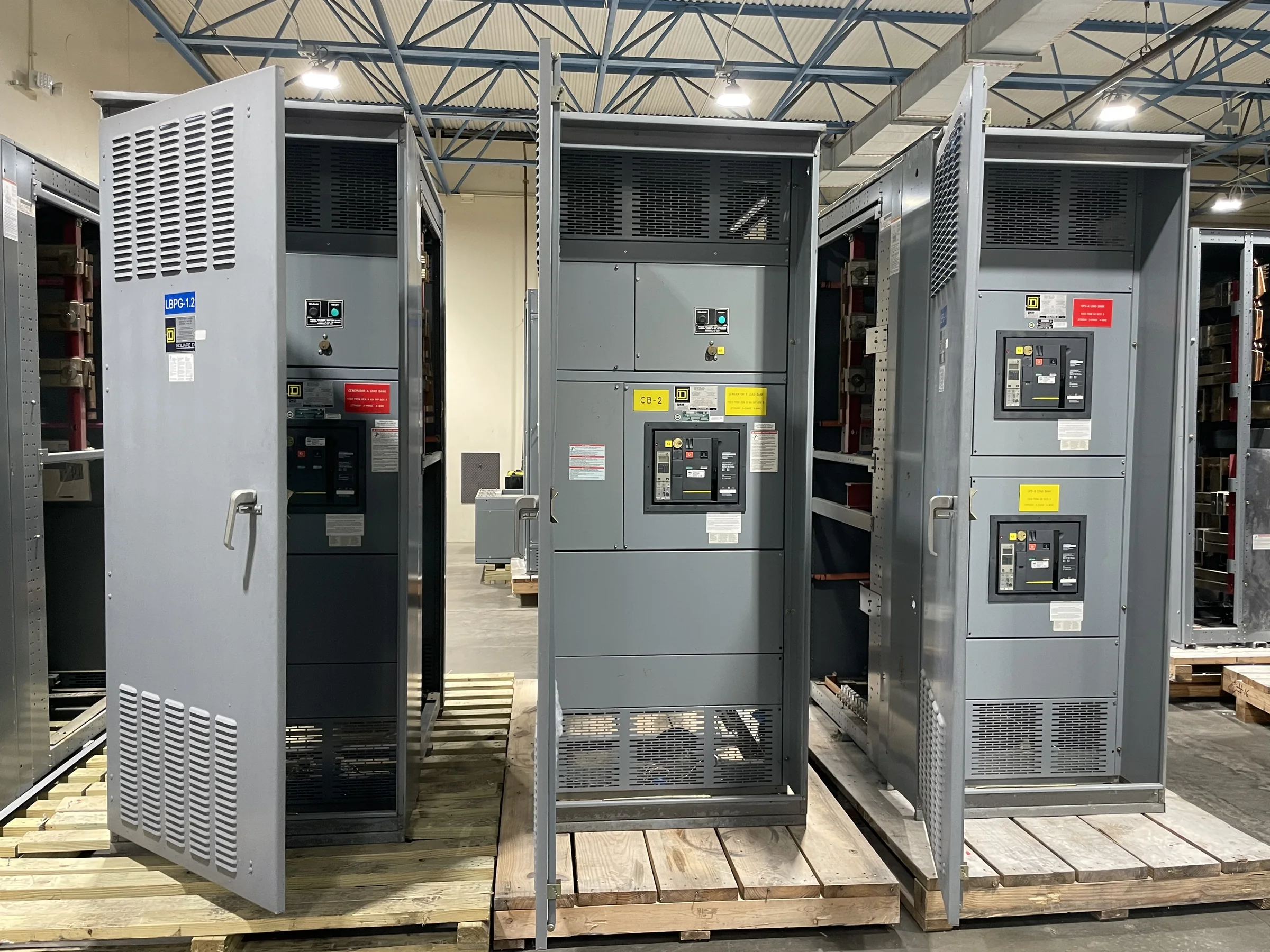
Define the Modernization Scope Before Selecting Equipment
In League City, a switchgear modernization project may involve replacing a complete lineup, updating a section, or coordinating new equipment with existing distribution. Those approaches are not interchangeable: available space, electrical ratings, protective-device coordination, and the condition of equipment that remains in service all affect what can be specified. Start with the one-line diagram, equipment nameplates, available fault-current information, and a clear description of the loads served. Identify what must remain operational during construction and whether the project includes feeders, metering, controls, or downstream connections. A U.S. manufacturer can use this information to discuss a new custom-built assembly and potential interfaces. Final design, compatibility, applicable standards, and any required evaluation depend on the project and must be confirmed before purchase.
Resolve Existing-System Interfaces and Protection Requirements
A new assembly must work as part of the electrical system, not merely fit the footprint. For a replacement or retrofit, engineers should establish system voltage, phase and wire configuration, continuous load, available fault current, grounding arrangement, and the protective devices upstream and downstream. Existing settings and coordination studies may be incomplete or based on equipment that is changing; treating old settings as automatically suitable can leave equipment improperly coordinated. Record which circuits must transfer, which conductors can be reused, and where new terminations or transition sections may be needed. Compare proposed arrangements against verified field conditions, not only legacy drawings. Equipment ratings, device selections, compatibility, and engineering studies are project-specific. Resolve uncertainties with the responsible electrical engineer before releasing the order.


Plan Around Gulf Coast Conditions and Building Constraints
League City’s Gulf Coast setting makes the installation environment relevant to equipment selection and preservation, but it does not by itself determine an enclosure or rating. Confirm whether gear will be indoors, exposed to weather during staging, located in a humid or corrosive area, or subject to site-specific flood and water-ingress concerns. Document room dimensions, door and corridor clearances, overhead obstructions, housekeeping pads, cable entry direction, and ventilation conditions. Those details can affect enclosure construction, access, assembly dimensions, and the route from truck to final position. Protect equipment from moisture and contamination during transport, storage, and construction. Any environmental construction or installation requirements should follow the project documents and manufacturer guidance; suitability must be confirmed for the actual site.
Coordinate Drawings, Submittals, and Purchase Approval
A complete procurement package reduces the chance that a technically acceptable lineup arrives with unresolved interface questions. Provide the latest one-line and, where available, elevations, schematics, control requirements, load information, and existing equipment data. Identify required meter functions, communications interfaces, labeling conventions, spare provisions, and connection points without assuming a feature is included unless it appears in the approved scope. Ask the manufacturer to clarify deviations, exclusions, and information still needed for final design. Review approval drawings against the electrical design and measured site conditions before authorizing production; late changes can affect cost, configuration, and schedule. UL 891 applies to appropriately evaluated low-voltage switchboard assemblies, not universally to medium- or high-voltage equipment. Confirm the exact assembly’s applicable evaluation and documentation.
Build a Realistic Schedule Around Shutdown and Delivery
Modernization timing depends on more than fabrication. Engineering review, drawing approval, component availability, site readiness, testing requirements, freight arrangements, and the planned outage all influence the project sequence. Share the required in-service date as a planning constraint, not as an assumed delivery guarantee, and request current project-specific schedule information before committing to a shutdown. For League City delivery, confirm receiving hours, truck access, unloading equipment, staging space, weather protection, and any site rules for drivers or large loads. Check whether the shipping configuration can pass through the route into the electrical room and whether rigging must be arranged separately. Nationwide shipping is available, but transit and site-handling plans should be verified for the actual order and destination.
Prepare Installation, Verification, and Turnover Records
Before installation, align the approved drawings, switching plan, contractor scope, outage window, and site safety requirements. Electrical work must be performed by qualified personnel under applicable procedures, with equipment de-energized and absence of voltage verified before work begins. Confirm who is responsible for removing existing gear, making connections, grounding, testing, and energization approval; unclear boundaries can delay restoration or leave documentation incomplete. After installation, record final device settings, circuit and equipment labels, inspection findings, test documentation, and drawing revisions in the facility’s maintenance records. The precise tests and acceptance criteria depend on the design, equipment, project specifications, and governing requirements. A manufacturer can discuss the new equipment package and project documents, while the project team confirms installation and commissioning responsibilities.