Define the La Porte Project Before Requesting a Quote
A useful switchgear quote starts with the electrical duty and the limits of the work, not a product name alone. Identify whether the project calls for a low-voltage switchboard, medium-voltage gear, or a replacement assembly, then provide system voltage, phase, frequency, available fault-current information, and the required continuous-current capacity when known. Include the one-line diagram and note the source transformer, utility service, generators, and major loads that affect coordination. In La Porte, where industrial facilities may have process equipment and multiple operating areas, clarify which loads must remain available during planned outages. These details help the manufacturer assess the intended application, identify missing engineering inputs, and quote equipment aligned with the project rather than an assumed standard configuration.
Match the Assembly to the Electrical Design
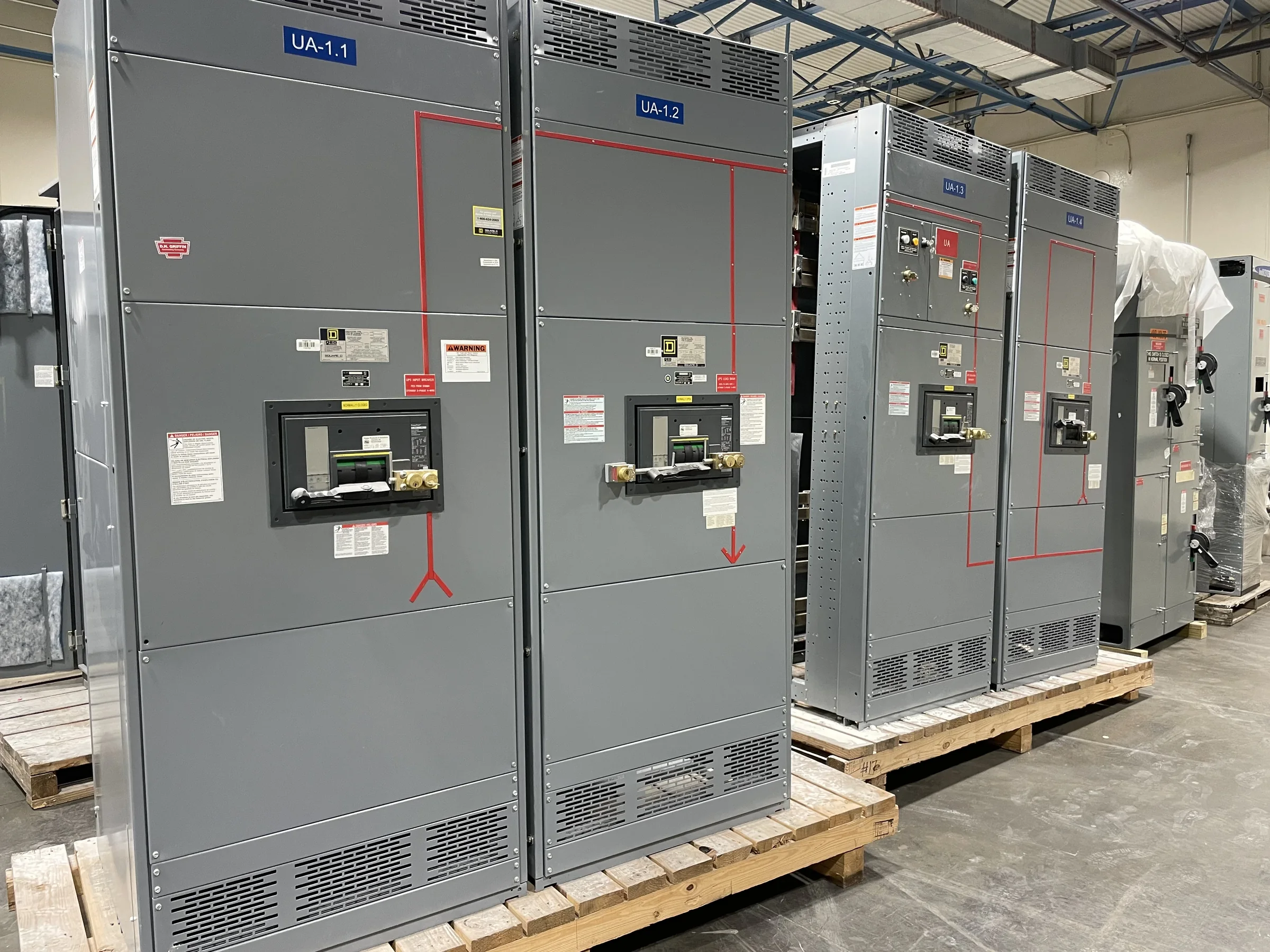
Protective-device selection, bus arrangement, and enclosure details influence both safety and fit. Share the specified breaker types and frame sizes, trip-unit functions, bus ratings, neutral requirements, and any metering or control provisions shown in the design documents. If the existing gear is being replaced, provide manufacturer and catalog information, photographs, nameplate data, and measured compartment dimensions where available; visual similarity does not establish electrical or mechanical compatibility. The engineer of record should confirm the design basis, including fault duty, protective coordination, grounding, and applicable project standards. A quote can identify assumptions and open questions, but it does not substitute for approved drawings or field verification. Resolving these items early can prevent costly revisions after equipment dimensions and interfaces are finalized.


Plan Around Existing Gear and Site Access
Replacement work often depends on more than the switchgear footprint. Confirm room clearances, ceiling height, door and corridor dimensions, floor loading, cable entry direction, conduit locations, and the route from the receiving point to the electrical room. Record whether the lineup must pass through an existing doorway or be positioned with limited rigging access. La Porte sites may have active industrial operations, controlled entry, truck-routing rules, and restricted work windows; provide those constraints when requesting pricing so packaging, shipment coordination, and installation planning can be considered together. Do not assume an existing lineup can be removed or a new one installed without an outage. The facility team and qualified electrical contractor must plan safe isolation, de-energization, and verification before work begins.
Make Timing and Delivery Assumptions Visible
A requested delivery date should be treated as a planning target until the manufacturer reviews the scope, engineering requirements, and component availability. Identify the date equipment is needed on site, the required approval-drawing milestone, and any shutdown or construction sequence that affects when the lineup can be received. Ask what events govern the quoted schedule and when changes to the approved design could affect it. For delivery to La Porte, specify the receiving address through the project’s authorized channels, site contact, receiving hours, unloading arrangements, truck restrictions, and whether the shipment needs advance notice. Confirm who provides the unloading equipment and where crates may be staged. Clear responsibilities reduce the risk of a delivery arriving when the facility cannot safely accept or protect it.
Submit Documents That Support a Comparable Quote
A complete request package makes it easier to compare scope and identify exclusions before award. Include the latest one-line diagram, equipment schedules, specifications, physical layout or elevation, cable-termination requirements, and relevant control schematics. Mark revisions clearly and state whether documents are issued for budget pricing, bid, or approved design. List requested quantities, spare provisions, accessories, metering, communications, and any required replacement interfaces; avoid relying on a legacy bill of materials if the electrical duty or installation has changed. Ask the manufacturer to identify proposed deviations, customer-furnished items, engineering assumptions, and the documents needed for approval. If the project requires a particular standard or evaluation, name it explicitly and confirm applicability for the equipment type. UL 891 applies to appropriately evaluated low-voltage switchboard assemblies, not automatically to every switchgear product.
Review the Quote Before Releasing the Order
Before purchase, check the quoted description against the approved electrical design and confirm that ratings, lineup arrangement, incoming and outgoing provisions, accessories, and documentation match the intended application. Resolve exceptions in writing, including any unconfirmed dimensions, interface details, or customer responsibilities. Verify the quoted commercial scope, shipping terms, requested ship-to coordination, and the process for reviewing and approving drawings; availability and schedule remain specific to the project and are not guaranteed by a general lead-time statement. For a replacement, coordinate the new equipment’s connection points with field measurements and the contractor’s installation plan before final release. Confirm that the facility has an outage and commissioning plan with qualified personnel. A carefully reviewed quote helps procurement, engineering, and operations agree on what is being supplied and what must be completed at the site.