Start the Sugar Land Quote With the Existing Distribution System
A useful switchgear quote starts with what the equipment must connect to, not just the requested price or a cabinet description. For a Sugar Land facility, assemble the available one-line diagram, service voltage, phase and wire configuration, source information, and the ratings of upstream protective devices. Identify whether the project is new construction, a capacity addition, or replacement of existing gear; each can change the required arrangement and transition plan. Record the available fault-current information and the basis and date for it, since source changes may make older studies unreliable. Also note the intended use, such as service entrance, distribution, or generator paralleling, without assuming one assembly fits every role. Complete inputs help the manufacturer identify open questions before a proposal is finalized.
Resolve Ratings, Protection, and Equipment Interfaces
The quote should distinguish the electrical ratings the project requires from assumptions that still need engineering confirmation. Specify the system voltage, continuous current, short-circuit withstand or interrupting requirements as applicable, enclosure environment, and the protective-device functions needed for the application. Breaker types, trip units, metering, ground-fault protection, and coordination with upstream and downstream devices affect both layout and performance. If the existing installation includes transformers, generators, automatic transfer equipment, or utility-controlled service components, document their interfaces and control requirements. These details matter because a physically similar lineup may not be electrically interchangeable. Provide the latest available coordination study and arc-flash information, or identify them as pending; final settings and design depend on verified system data and qualified engineering review.


Check the Room Before Approving the Lineup
A switchgear arrangement that works on a one-line diagram still has to fit the room and the route into it. Measure available wall and floor space, clear working areas, ceiling height, door openings, turns, ramps, and any elevator or loading limits. Note cable entry direction, trench or overhead routing, termination space, and whether existing conductors can reach the proposed connection points. In Sugar Land, site access can also be affected by occupied buildings, shared service drives, controlled gates, and delivery windows; confirm these constraints with the facility and receiving team rather than relying on a map estimate. Room temperature, moisture, dust, and ventilation conditions help establish the appropriate enclosure and installation approach. Resolve physical constraints early to avoid a lineup that cannot be placed, connected, or maintained safely.
Make Schedule Discussions Useful for Procurement
A requested ship date is meaningful only when the scope, approvals, and dependencies behind it are understood. Ask the manufacturer to identify the information needed to release the design, the drawing review steps, and any customer-supplied items or decisions that could affect the schedule. Custom arrangements, specified components, protection features, and late revisions can influence production timing, so avoid treating an early estimate as a guaranteed delivery commitment. For a facility project in Sugar Land, coordinate anticipated delivery with construction access, outage planning, electrical-contractor readiness, and any restrictions on truck staging or receiving hours. Separate equipment shipment from installation, testing, and energization milestones; they are related but not the same activity. A documented schedule basis gives procurement and project teams a practical way to track decisions and communicate changes.
Build a Complete Submittal and Quote Package
A complete request helps procurement compare equipment on scope rather than on a headline price alone. Include the one-line diagram, load and service information, required device functions, room drawings, cable-entry preferences, and applicable project specifications. State quantities, requested options, metering needs, control interfaces, and whether drawings, operation manuals, or other closeout documents are required. Identify the governing project standards and any requested evaluation or listing, while allowing the manufacturer and project engineer to confirm applicability to the specific assembly. UL 891 concerns appropriately evaluated low-voltage switchboard assemblies; it is not a blanket certification for medium- or high-voltage equipment, and a quote should not imply otherwise. Ask the proposal to clearly mark included, excluded, and unresolved items. That clarity helps prevent scope gaps from surfacing after approval.
Plan Delivery and Replacement Work Around Site Conditions
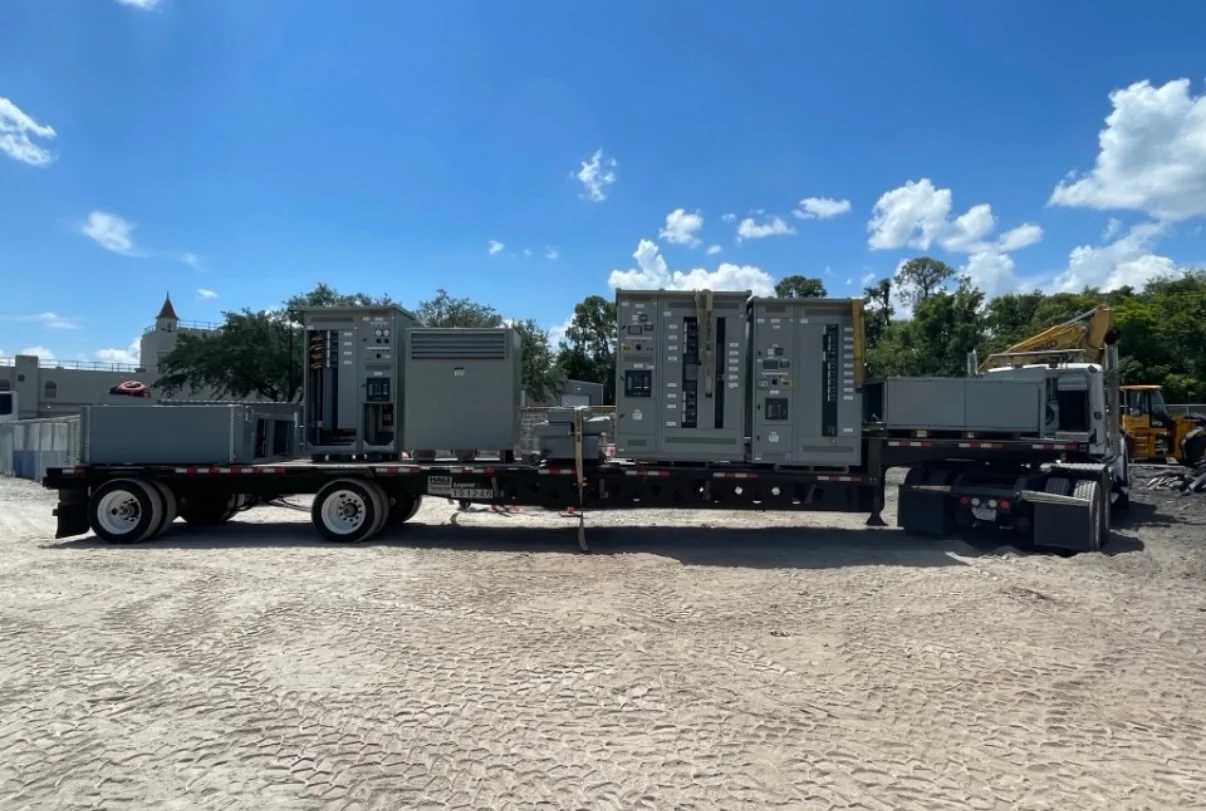
For delivery to Sugar Land, provide the receiving address, site contact, unloading method, truck restrictions, delivery-hour requirements, and any staging limitations before shipment is arranged. Confirm whether the equipment will arrive as a complete lineup or in sections, since transport dimensions and the path from the truck to the electrical room can affect rigging plans. For replacement work, identify existing gear, connection points, access constraints, and the planned outage window; the contractor must determine a safe, approved sequence, with equipment de-energized before work begins. Do not assume the quoted assembly is a drop-in replacement: dimensions, bus connections, cable terminations, protective coordination, and controls all require project-specific verification. Review shipping condition, receiving inspection responsibilities, and site storage needs with the project team so delays or unsuitable storage do not compromise installation readiness.