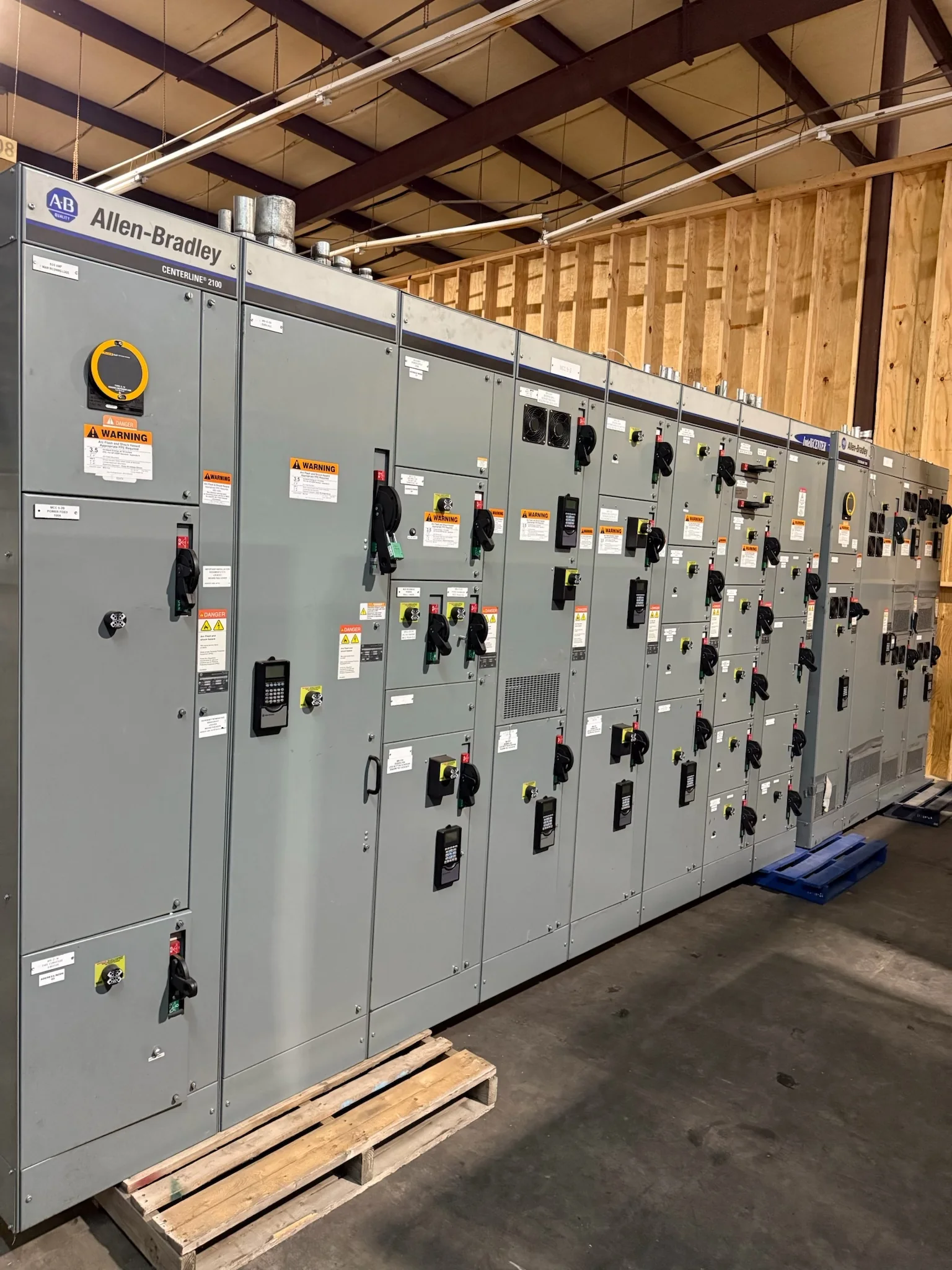
Define the Replacement Scope Before Selecting Equipment
A switchgear replacement in Katy starts with documenting what the existing equipment serves and what must remain operational during the changeover. Gather available one-line diagrams, panel schedules, equipment nameplates, protective-device settings, and records of prior modifications. Compare those documents with field conditions: undocumented feeder changes, spare spaces that are no longer usable, and obsolete control arrangements can all affect the replacement design. Identify the affected voltage, system configuration, available fault-current information, load requirements, and intended future capacity with the project engineer. These details influence the equipment arrangement and review process; they should not be inferred from a cabinet’s exterior dimensions. Confirm the required scope with the engineer of record and facility team before requesting a quotation.
Resolve Electrical Ratings and Protection Details
The replacement must suit the electrical system, not simply match the old lineup’s appearance. The project team should establish system voltage and frequency, continuous load, service conditions, fault-current rating, and the required interrupting and withstand capabilities of the equipment and devices. Protection coordination also deserves early attention: existing relay or trip settings may no longer fit revised loads, utility conditions, or downstream equipment. Share the available fault study and coordination study, and flag any planned changes to transformers, generators, or utility service. Where documentation is incomplete, the responsible engineer must determine what field investigation or updated analysis is needed. Ratings, device compatibility, and applicable standards are project-specific, so the final arrangement should be reviewed against the actual installation before release.


Coordinate the Equipment Footprint With the Existing Room
Physical fit can become a schedule problem when an apparently similar replacement has different section widths, depth, cable-entry locations, or access requirements. Measure the room and existing lineup, including wall clearances, overhead obstructions, conduit approaches, door swings, and the route from the building entrance to the installation area. Katy facilities may have active production, warehouse traffic, or tenant operations that limit when equipment can be moved through shared spaces; verify those constraints with site management rather than assuming ordinary access. Compare proposed dimensions and connection details with field measurements before approving drawings. If existing foundations, bus connections, or conduits are to be reused, confirm their condition and suitability with the project team. This review helps expose conflicts before fabrication or delivery.
Plan the Outage and Changeover Around Facility Operations
A replacement plan should define what the equipment supplies, which loads can be interrupted, and whether temporary power or staged work is needed. Production schedules, refrigeration, building controls, life-safety systems, and tenant services can make an outage window difficult to secure. The facility’s authorized electrical personnel and qualified contractor should develop the switching, isolation, verification, and commissioning plan; de-energized work and appropriate safety controls are essential. Confirm responsibilities for utility coordination, permits, shutdown notices, backup generation, and restoring loads. New equipment may require connection changes or revised control wiring, so do not assume a direct, same-day swap based on matching labels. A realistic changeover sequence protects people and operations while allowing time to identify discrepancies before the system is returned to service.
Review Drawings, Submittals, and Equipment Scope
A complete quotation request helps the manufacturer address the actual project instead of pricing an assumed configuration. Include the one-line diagram, equipment schedule, required ratings, proposed lineup arrangement, cable and bus connection information, environmental conditions, and any specified controls or metering. Identify which existing components are expected to remain, and provide interface requirements for upstream and downstream equipment. The submittal review should resolve dimensions, connection points, device selections, control schematics, and deviations before construction. UL 891 applies to appropriately evaluated low-voltage switchboard assemblies; it is not a blanket certification for medium- or high-voltage equipment, and a product’s labeling must be confirmed for the specific assembly. Confirm applicable standards, evaluation, documentation, and project acceptance requirements in writing before placing an order.
Align Timing, Delivery, and Site Readiness
Discuss the project schedule directly with the U.S. manufacturer and treat any proposed timing as dependent on the approved scope, design review, component availability, and manufacturing sequence. Ask which submittals or customer decisions are needed to keep the work moving, and identify approval dates alongside the required on-site date. For delivery to Katy, confirm the receiving address, truck access, unloading equipment, staging space, delivery hours, and any restrictions on large vehicles or site entry. Coordinate the shipment with the electrical contractor’s installation plan so equipment does not arrive before the room and receiving crew are ready. American components, custom builds, short lead times, and nationwide shipping may be available offerings, but exact configuration, availability, and delivery timing require project-specific confirmation before commitment.