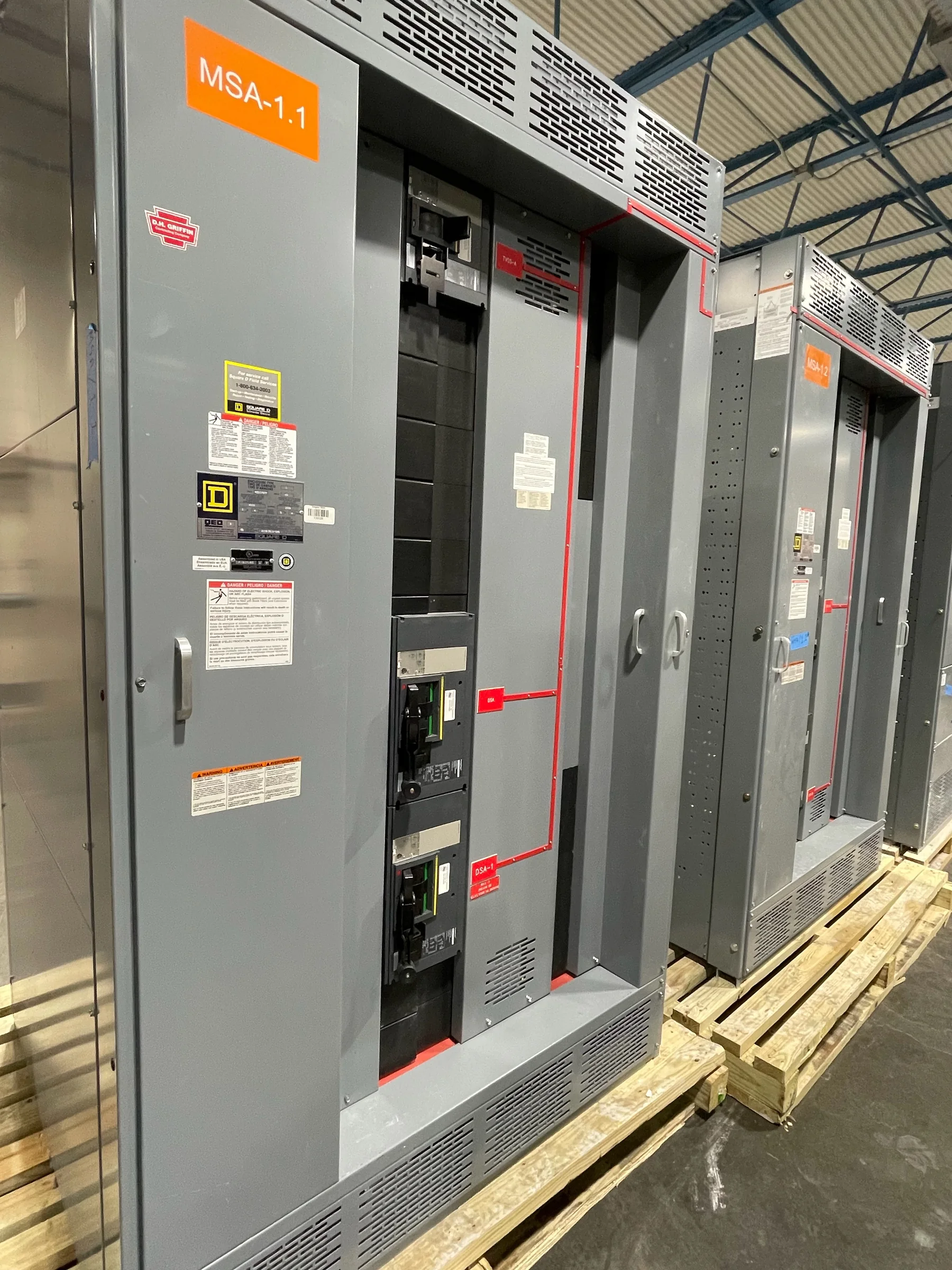
Define What the Replacement Must Accomplish
In Pasadena, a replacement decision often starts with the equipment’s role in a plant, warehouse, utility service, or commercial facility—not with a catalog description. Document the existing lineup’s function, system voltage, phase, frequency, bus arrangement, available fault current, and connected loads, then identify planned changes such as added motors or process equipment. These details determine whether a new assembly can meet the operating need and whether upstream protection or downstream distribution also requires review. Record the existing nameplate data and gather current one-line diagrams, protective-device information, and maintenance records. Missing or conflicting records are common project risks: resolving them early gives the manufacturer and the facility’s electrical engineer a sound basis for a project-specific design rather than assumptions that could affect compatibility or safety.
Verify the Existing Installation Before Specifying Equipment
A replacement lineup must fit the electrical system and the physical space, and those are separate checks. Confirm the switchgear’s dimensions, orientation, cable entry and exit points, bus connections, compartment arrangement, and access clearances against field conditions. Pasadena facilities can include established industrial sites where later process changes, piping, conduit, or structural work have narrowed the original installation area. A drawing alone may not show those obstructions or the route from the unloading point to the electrical room. Provide measured site information and photographs, and arrange qualified site review when needed. Also establish whether existing conductors and terminations can be reused; their condition, material, size, and termination limits must be evaluated for the proposed equipment. Early verification helps prevent fit conflicts and unplanned field modifications.


Coordinate Shutdown, Temporary Power, and Cutover Planning
The equipment schedule is only one part of the project timeline. A replacement requires coordinated engineering, submittal review, manufacturing, shipping, site preparation, installation, inspection, and commissioning; actual timing depends on the approved scope, components, and project conditions. For a Pasadena plant or other operating facility, determine which loads cannot tolerate an outage, what shutdown windows are available, and whether an engineered temporary-power arrangement is warranted. Temporary feeds and any transfer plan require review by qualified electrical professionals and must account for capacity, protection, grounding, and applicable requirements. Do not treat an energized installation as a shortcut: installation, testing, and cutover procedures must be planned around safe de-energized work. Agree on decision dates, document approval responsibilities, and maintain contingency time for field findings or design revisions.
Prepare a Complete Request for Quotation
A useful quotation request gives the manufacturer enough information to identify scope without treating unknowns as settled. Include the one-line diagram, equipment schedules, existing nameplate photographs, system and load data, available fault-current information, protection requirements, preferred operating features, and the intended installation location. State whether the request covers a complete new lineup, related distribution equipment, or replacement and retrofit coordination, and identify any owner, engineer, or contractor specifications. If the facility expects American components or a custom configuration, list those preferences for review alongside required interfaces and submittal documents. Clarify shipping destination, receiving hours, unloading capability, and who will receive the equipment. A written assumptions-and-exceptions list matters because it exposes gaps—such as unverified bus connections or unclear controls—before pricing and design decisions rely on them.
Review Standards, Protection, and Submittals for the Application
Before approving a design, check that the specified assembly and its intended use align with the applicable project requirements. UL 891 applies to appropriately evaluated low-voltage switchboard assemblies; it is not a blanket certification for medium- or high-voltage equipment, and no listing should be assumed without confirmation for the specific assembly. Voltage class, fault-duty requirements, protective-device coordination, metering, control interfaces, and enclosure conditions all need project-specific review. Pasadena’s industrial environment may make dust, moisture, heat, or corrosive exposure relevant, but the actual location and operating conditions should guide enclosure and component selection rather than a citywide assumption. Review layout drawings, ratings, device schedules, connection details, and interface points against the engineer’s documents. Resolve deviations through the responsible design team before release, since late changes can affect fit, procurement, and schedule.
Plan Shipping, Receiving, and Installation Handoffs
Nationwide shipping can support a Pasadena project, but delivery readiness depends on the site as much as the route. Confirm the receiving address and access restrictions, truck and unloading arrangements, delivery-hour limits, storage conditions, and the path into the electrical room before equipment is dispatched. Industrial campuses may require advance coordination for gate access, escorts, dock reservations, or restricted work areas; verify those rules with the facility rather than assuming standard receiving procedures. Assign responsibility for checking the shipment, documenting visible damage, protecting equipment from weather and contamination, and storing it under manufacturer guidance. Before installation, reconcile approved drawings with actual field conditions and confirm required supports, connections, and clearances. A clear handoff among manufacturer, contractor, engineer, and facility staff reduces avoidable delays and gives commissioning personnel the documentation needed to verify the completed installation.