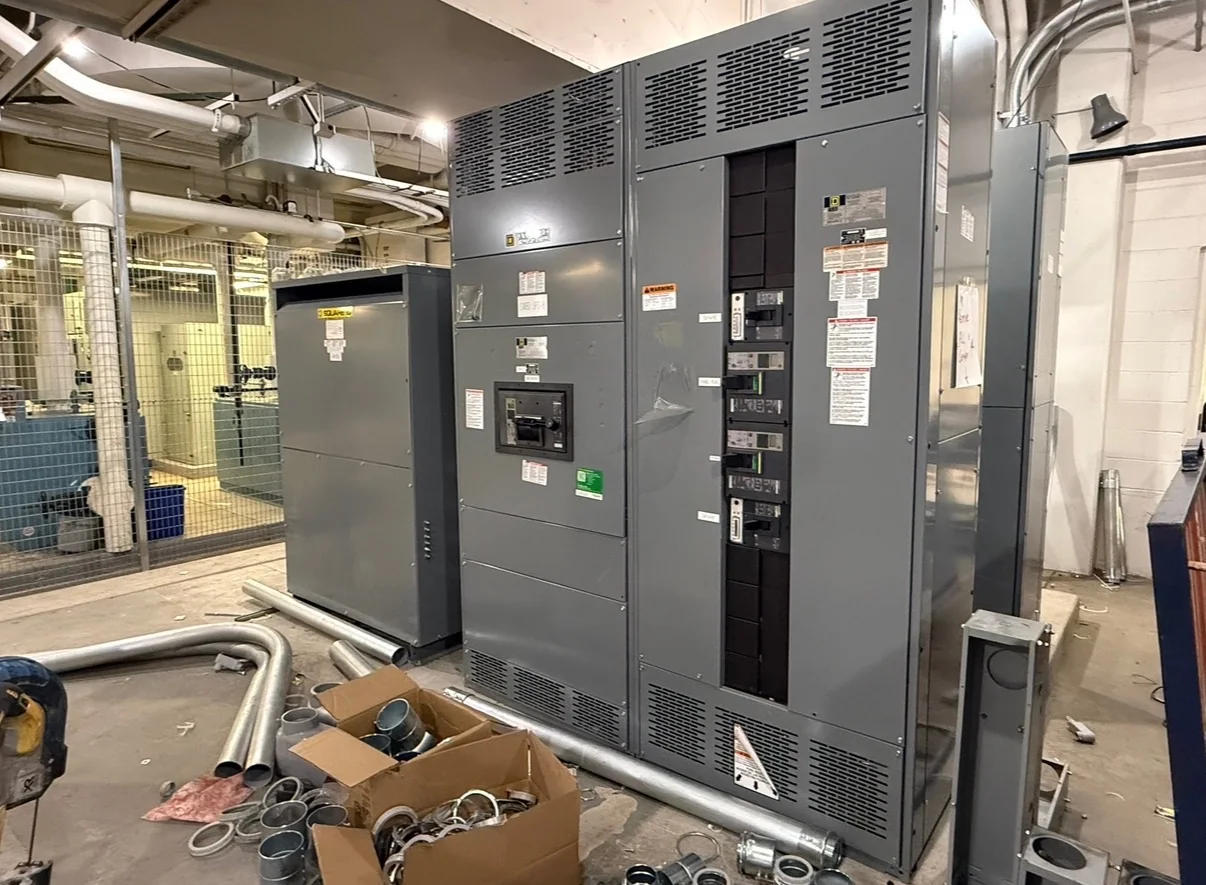
Define the Replacement Scope Before Selecting Equipment
In Texas City, switchgear replacement planning often starts with a practical question: what must remain in service while the existing distribution equipment is removed? Document the source, downstream loads, protective devices, metering, control power, and any ties to other lineups before asking for a replacement quote. Record nameplate data and gather available one-line diagrams, elementary drawings, and prior modification records; field conditions may differ from older documents. The replacement scope may involve a complete lineup, a section, or equipment coordinated with a broader electrical upgrade. That distinction affects interfaces, outage planning, and the information needed to evaluate a proposed configuration. A U.S. manufacturer can build new equipment around project requirements, but final design and compatibility depend on verified site and system details.
Verify Ratings, Protection, and System Compatibility
A replacement is not simply a matter of matching the old enclosure dimensions. The engineering review should confirm system voltage, frequency, continuous-current requirements, available fault current, protective-device functions, grounding arrangement, and the intended operating configuration. Confirm whether the equipment is a low-voltage switchboard or switchgear, or a medium-voltage assembly; terminology and applicable standards are not interchangeable. For low-voltage switchboard projects, UL 891 may be relevant when the specific assembly is appropriately evaluated, but it is not a blanket certification for every product or voltage class. Ask the project team to identify required standards, labels, and documentation in the specification. These checks matter because a mismatch can compromise coordination, interruptability, or the ability to connect safely to existing distribution.


Plan the Outage and the Transition to New Equipment
Outage duration is shaped by more than the equipment change itself. Texas City facilities may need to coordinate plant operations, utility interfaces, contractors, and other work occurring within a limited shutdown window. Build a sequence that accounts for engineering approval, equipment readiness, removal access, installation, termination, inspection, testing, and return-to-service authorization. Identify loads that require temporary arrangements and have qualified personnel determine whether those arrangements are feasible and compliant; do not assume a temporary feed is available. All work on electrical equipment must follow an approved safety program, including de-energization and verification before work begins where required. Discuss schedule assumptions early with the manufacturer, because design approvals, component selection, and shipping coordination can affect the project timeline. Specific availability and timing must be confirmed for the actual build.
Check Existing Interfaces and Texas City Site Conditions
Before finalizing a replacement layout, compare the proposed equipment with measured field dimensions and the existing installation. Note room clearances, cable-entry direction, conduit locations, bus connections, anchoring, floor openings, doorways, and any overhead or access restrictions. In an industrial setting near the Texas City waterfront, the project team may also need to assess humidity, airborne contaminants, temperature, and other environmental exposures at the actual installation point. Those conditions can influence enclosure construction, materials, and maintenance planning, but should be specified from site data rather than assumed from the city name. Confirm delivery access, receiving hours, unloading responsibility, and the route from the truck to the electrical room. These details matter: an electrically suitable lineup can still create costly delays if it cannot be moved into position or connected as planned.
Prepare a Complete RFQ and Review Submittals Carefully
A useful request for quotation gives the manufacturer enough information to evaluate the intended design without guessing. Include the one-line diagram, equipment schedule, applicable specifications, site measurements, cable and bus interfaces, protective-device requirements, metering and controls, environmental conditions, and requested documentation. Mark uncertain or field-verified items clearly so they can be resolved before release. During submittal review, check section arrangement, dimensions, ratings, device functions, connection points, and specified accessories against the project documents; flag deviations for engineering review rather than treating them as minor details. If American components or a custom build are preferred, state that in the purchasing requirements and confirm the proposed configuration. Clear documentation helps procurement compare offers on an equivalent basis and reduces the risk of discovering an interface conflict after fabrication.
Coordinate Delivery, Installation, and Closeout Records
Nationwide shipping can support a Texas City project, but delivery planning still needs to fit the site. Confirm the shipping destination, receiving contact, unloading method, packaging and storage expectations, and any restrictions on truck access or delivery timing. Protect equipment from moisture, contamination, impact, and unauthorized access while it is stored, following the manufacturer’s instructions. Before installation, reconcile the received equipment with the approved submittals and report discrepancies promptly. The project team should also plan for qualified installation, required inspections, testing, and commissioning under the applicable project procedures; equipment-specific instructions and acceptance criteria should be confirmed rather than presumed. Preserve final drawings, settings, test records, manuals, and approved deviations in the facility’s maintenance files. Complete closeout records help operators understand what was installed and support future troubleshooting, maintenance, and expansion.