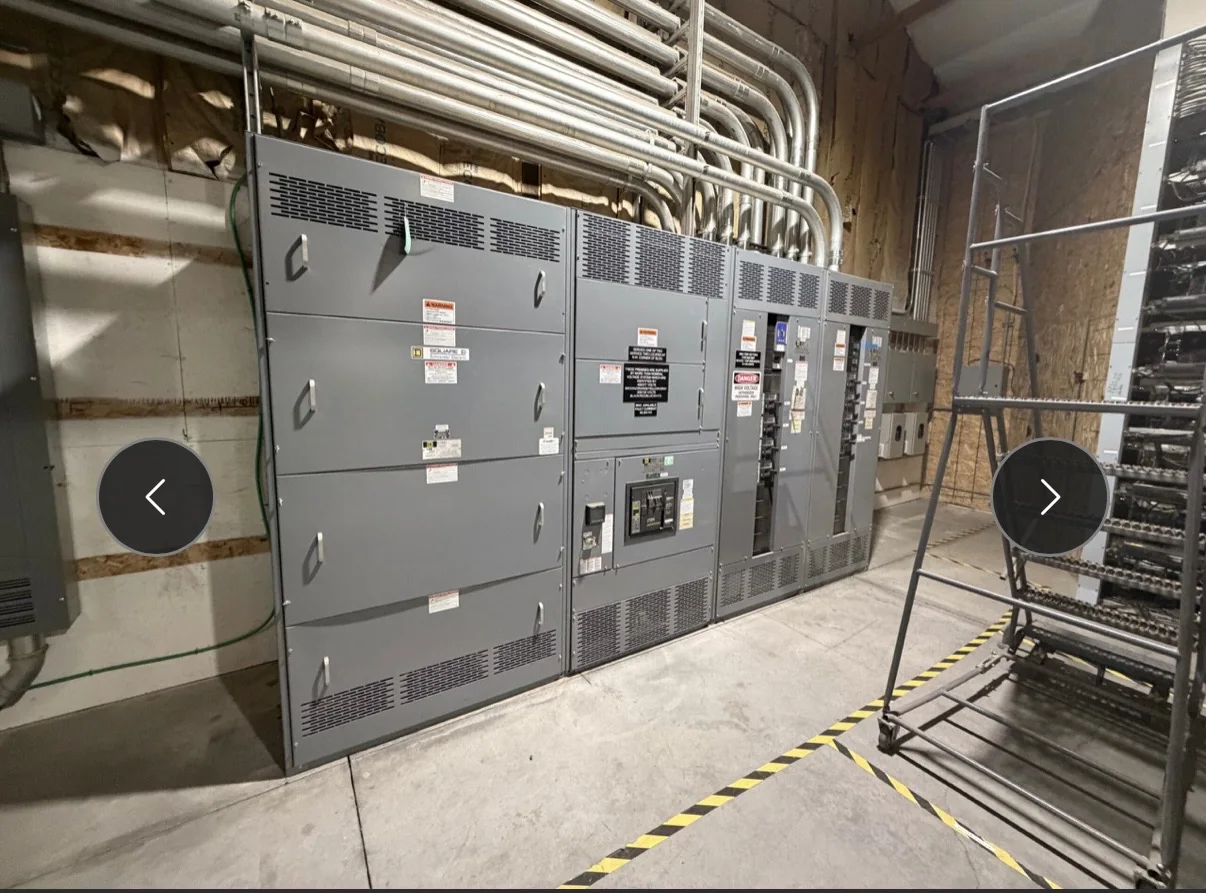
Define the Replacement Scope Before Selecting Equipment
In The Woodlands, a switchgear replacement may serve an office campus, commercial building, healthcare facility, utility plant, or another load profile, so start with the equipment’s actual role in the distribution system. Record the existing lineup’s manufacturer, catalog and serial numbers, voltage, phase, frequency, bus ratings, interrupting or withstand requirements, and protective-device details where available. Confirm whether the work covers a main switchboard, distribution section, switchgear lineup, or selected components; these terms describe different equipment and should not be treated as interchangeable. A complete scope also identifies upstream and downstream connections, grounding arrangement, metering, controls, and intended operating sequence. Clear scope prevents a quote from overlooking interfaces that affect safety, compatibility, outage planning, and the final installed configuration.
Verify Ratings and Existing System Compatibility
Nameplate information is a starting point, not proof that new equipment will suit the present system. Have the responsible electrical engineer confirm available fault current, system voltage, protective-device coordination, and the required short-circuit or withstand performance using current project data. Existing settings, transformer characteristics, conductor sizes, and upstream protective equipment can influence the selection. For low-voltage switchboard assemblies, specify whether UL 891 evaluation is required and verify its applicability to the proposed assembly; it is not a blanket certification for medium- or high-voltage equipment. Also identify any required metering, communications, arc-energy reduction features, or selective coordination criteria. Resolving these decisions before purchase matters because a seemingly similar replacement may not meet the installation’s electrical, operational, or code-related requirements.


Measure the Room, Route, and Connection Points
The existing lineup’s footprint does not alone establish that a replacement can be installed. Compare overall dimensions, section arrangement, working clearances, cable-entry locations, bend space, anchorage, and access for maintenance against verified site conditions. In The Woodlands, a facility may have constrained electrical rooms, occupied tenant areas, landscaped approaches, or controlled loading access; assess the actual building rather than assuming a standard delivery route. Confirm doorway and corridor dimensions, turning space, floor loading, elevator limits if relevant, and whether equipment must be moved in sections. Document bus and cable interfaces, conduit positions, and grounding connections so the design accounts for field conditions. These checks can expose civil, rigging, or transition work early, when it is easier to plan.
Build Timing Around Engineering and Outage Approval
A useful purchasing schedule separates drawing development, customer review, production, shipment, site readiness, and installation rather than treating delivery as the finish line. Provide the manufacturer with a firm scope and identify who can approve drawings, answer technical questions, and authorize changes. Discuss required dates and constraints early, but confirm availability and timing for the specific configuration; custom-built equipment does not have a universal lead time. Coordinate the planned outage with facility operations, tenants, affected loads, and the electrical contractor, allowing time for permits, switching plans, temporary power decisions, and commissioning. If the existing lineup must remain in service until cutover, identify preservation and contingency responsibilities. Linking procurement milestones to outage authorization reduces the risk of equipment arriving before the site or project team is ready.
Prepare a Complete Request for Quote Package
A strong request for quote gives suppliers enough information to price the intended equipment without filling gaps with assumptions. Include the one-line diagram, equipment schedules, site photographs, existing nameplate data, applicable specifications, room and access dimensions, and the required connection and control details. Mark known items as verified and label uncertain measurements or missing records for follow-up. State the requested scope clearly: new equipment only, engineering submittals, replacement lineup, or specified retrofit-related interfaces. List required drawing formats, review dates, document language, shipping destination, packaging expectations, and any site receiving restrictions. Ask the manufacturer to identify exclusions, assumptions, and project-specific open items in its proposal. Comparing bids on the same documented basis helps procurement distinguish genuine scope differences from apparent price differences.
Coordinate Delivery, Installation, and Turnover
Delivery planning should connect the shipping method to the receiving site’s route, unloading capability, storage conditions, and installation sequence. For a Woodlands-area facility, confirm gate access, delivery-hour rules, security procedures, road or parking restrictions, and the party responsible for unloading before equipment ships. Protect equipment from moisture, dust, impact, and unauthorized access during any delay between receipt and installation; follow the manufacturer’s handling and storage instructions. Before work begins, the qualified project team should verify the approved drawings, connection points, required clearances, and outage boundaries. Electrical installation and testing must be performed by qualified personnel under applicable safety procedures, with equipment de-energized for work as required. Turnover records should capture final drawings, device settings, test documentation, and equipment identification for future maintenance.