What Voltage Class Actually Describes
Voltage class is a way to group equipment by the electrical system voltage it is designed to serve; it is not, by itself, a complete equipment specification. In U.S. projects, switchgear is commonly discussed in low-, medium-, and high-voltage categories, but boundaries and terminology can vary by application and governing standard. The system’s nominal voltage, maximum operating voltage, insulation requirements, and equipment function all matter when selecting a class. Confusing nominal voltage with the equipment’s rated voltage can lead to incompatible gear, protection settings, or cable interfaces. Start with the one-line diagram and utility or facility system data, then confirm the applicable voltage ratings with the engineer of record and manufacturer before requesting a quote.
Low-Voltage Gear: Match the Assembly to Its Role
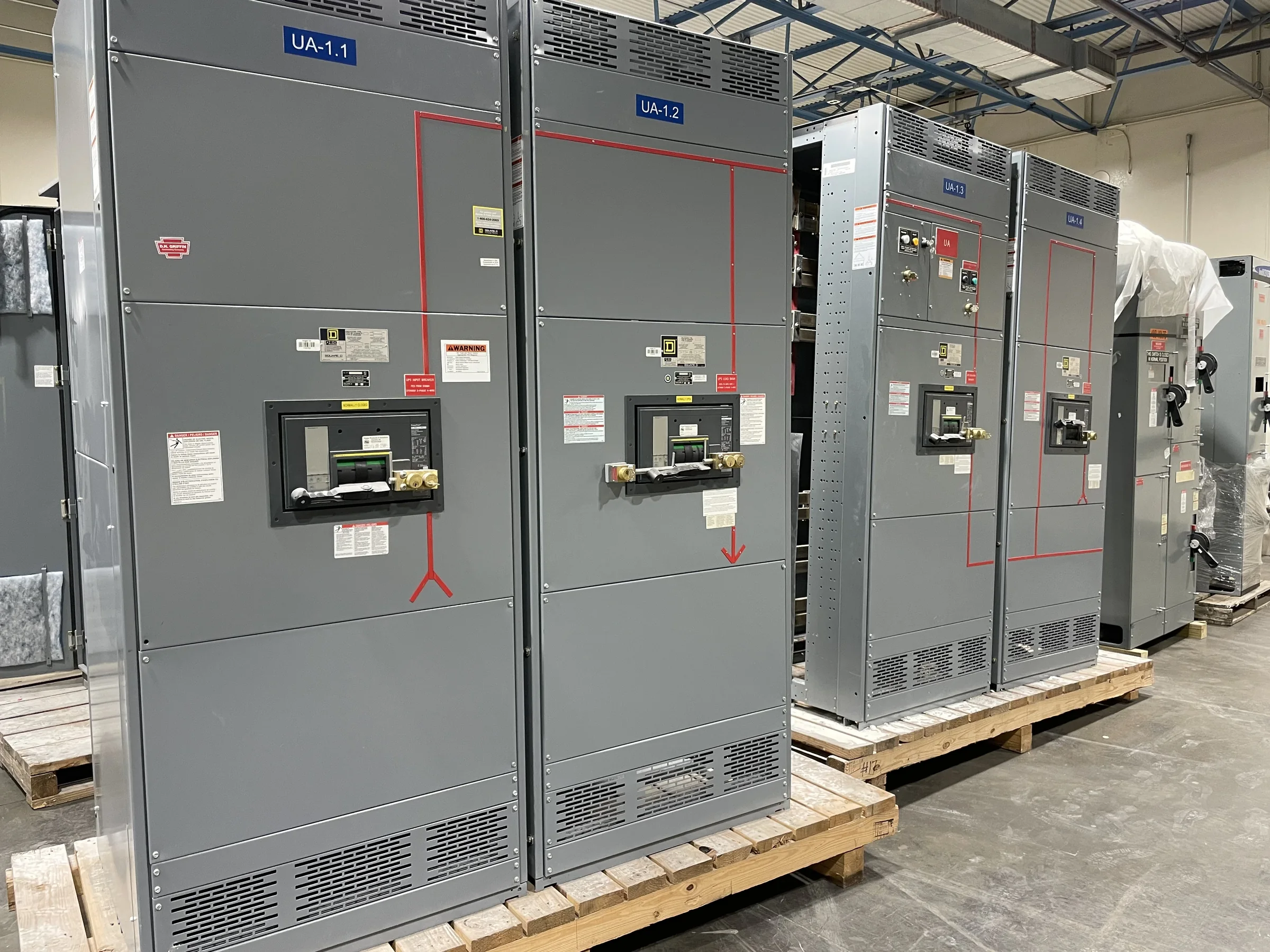
Low-voltage switchboards and switchgear often serve service entrances, distribution points, or large loads, but their functions and construction are not interchangeable. A procurement package should identify the intended role, nominal system voltage, available fault current, main and feeder arrangement, and required protective devices. Bus rating, short-circuit withstand or interrupting requirements, enclosure, and metering also need project-specific review. UL 891 applies to appropriately evaluated low-voltage switchboard assemblies; it should not be treated as a blanket label for every product or a substitute for checking the assembly’s exact construction and marking. Confirm the required standard, evaluation, and documentation for the specified equipment. Early alignment avoids a late redesign when the proposed lineup does not fit the electrical study or procurement documents.


Medium-Voltage Equipment Requires System-Level Coordination
Medium-voltage applications bring additional coordination between incoming supply, transformers, feeder circuits, switching devices, and protective relays. Specify the system’s nominal and maximum voltage, grounding method, frequency, fault duty, and required operating sequence rather than relying on a broad voltage-class description. Insulation level, interrupting capability, relay functions, current and voltage transformers, and cable termination arrangements must suit the particular system and installation. The utility’s requirements and the facility’s protection and coordination studies can affect the lineup and device selection. Include those documents, or identify when they will be available, during quotation and engineering. A mismatch can affect protection performance, interfaces, or acceptance review; exact ratings and compatibility must be confirmed for the project, not assumed from the class name.
High-Voltage Applications Need Defined Interfaces
High-voltage equipment is selected within a broader system design, where insulation coordination, switching duty, grounding, and connection to adjacent equipment all require careful review. The project team should establish the voltage basis and applicable standards, then document the one-line configuration, operating conditions, protection approach, and required interfaces. Site conditions can also influence equipment arrangement, clearances, access, and the transition to cables, bus, or other apparatus. A general request for high-voltage switchgear is not enough to establish a suitable design, and product scope can differ across projects. Identify the responsible engineer and utility or owner review requirements early. The manufacturer can assess a proposed configuration against supplied project data, but ratings, compliance, and suitability remain specific to the final design and evaluation.
Translate the Voltage Class into a Complete RFQ
A useful request for quotation gives manufacturers enough information to distinguish the required equipment from a merely similar lineup. Include the current one-line diagram, equipment schedules, system voltage and grounding, available fault-current data, protection requirements, site and enclosure conditions, and applicable project specifications. Note whether the scope includes controls, metering, transition sections, special bus arrangements, or coordination with existing gear. Flag open design questions instead of filling gaps with assumed ratings; unresolved inputs can change the design, price, and schedule. A U.S. manufacturer offering custom builds and American components can review the specified requirements and discuss feasible options, but availability and suitability depend on the project. Ask which submittals, drawings, and review milestones are needed to release the approved design.
Plan Timing, Access, and Delivery Before Release
Voltage class affects more than the electrical design: it can influence equipment footprint, shipping configuration, receiving access, and installation sequencing. Before approving a lineup, compare its proposed dimensions and shipping sections with doorways, corridors, floor loading, rigging paths, and the final equipment room. Confirm who handles unloading, staging, storage, and movement into position, especially when site access is restricted or construction is still underway. Coordinate submittal review, drawing approval, utility interfaces, and required site documentation with the project schedule; a quoted lead time is not a guarantee and depends on finalized scope and availability. Nationwide shipping can support projects across the United States, but the delivery plan, packaging, route, and timing should be confirmed for the destination and site conditions.