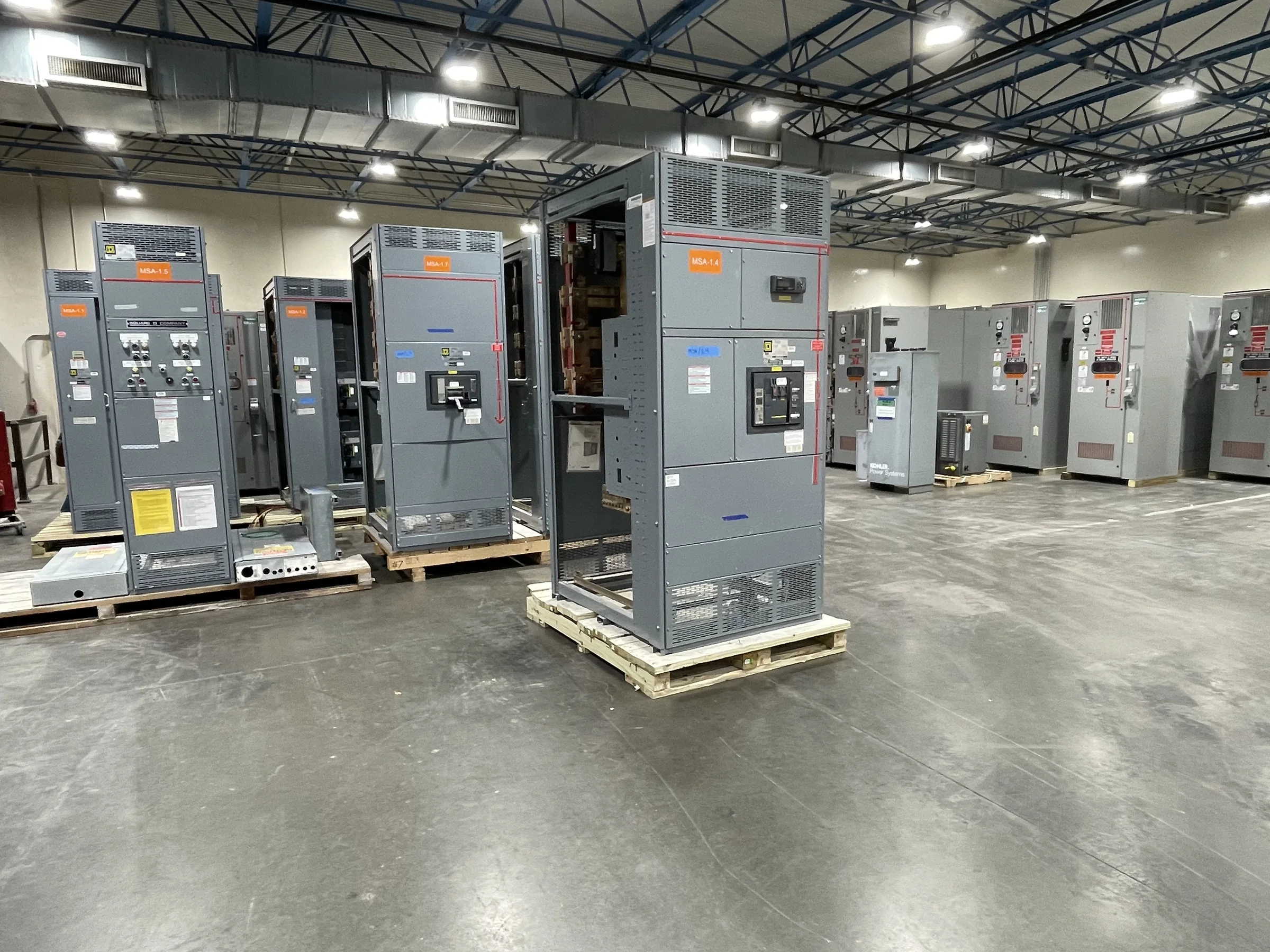
Confirm the Assembly Falls Within UL 891 Scope
UL 891 applies to low-voltage switchboard assemblies; it is not a blanket certification for medium- or high-voltage equipment. Start by confirming the system voltage, service arrangement, intended use, and equipment classification with the project engineer and authority having jurisdiction. Those details help establish whether a UL 891 switchboard is appropriate and what evaluation, marking, or other requirements apply. A manufacturer can build to a project specification, but the applicable standard and any required certification must be verified for the specific assembly—not assumed from the product category. If the project includes equipment outside the switchboard’s scope, identify those interfaces early. Clear boundaries prevent a bid from treating unlike equipment as interchangeable and help the design team resolve compliance questions before procurement.
Specify the Electrical Configuration and Interfaces
A useful request for quotation describes how the switchboard must connect to the facility, not just its nominal voltage or service size. Provide available system information, incoming source arrangement, required mains and feeder provisions, bus and neutral requirements, grounding approach, and any transfer or metering functions shown in the design. Include the one-line diagram and identify which devices are furnished by others. These details affect the arrangement, coordination, and physical space available for connections. Confirm interrupting and withstand requirements using project-specific fault-current and protective-device information; do not select ratings by copying an older lineup without checking current conditions. When a utility, generator, transformer, or downstream distribution section is involved, document the interface so responsibilities and connection details can be reviewed before release.


Coordinate Protection, Controls, and Future Circuits
Protective devices must suit the system study and operating intent, while control and indication provisions must match how the facility will monitor and use the equipment. Submit the available short-circuit, coordination, and arc-flash study information, along with specified breaker types, trip functions, metering, alarms, and communication requirements. The final selection and settings remain subject to engineering review and the project’s governing requirements. Also identify spare spaces, planned circuits, and any provision for future expansion; an empty compartment is not automatically ready for a later device or load. Define who supplies, installs, configures, and tests field-connected controls and communications. Settling these points before fabrication reduces late design changes and helps commissioning teams understand what functions the delivered assembly is expected to provide.
Check the Room, Access Route, and Installation Plan
A switchboard that fits on the electrical-room plan may still be difficult to install if the route includes narrow doors, low ceilings, tight turns, stairs, or limited staging space. Provide room dimensions, equipment location, wall and floor conditions, access constraints, and the intended delivery path for review. Confirm working clearances and access provisions against the applicable design requirements and local authority expectations; do not treat a shipping dimension as proof that the installed arrangement will fit. Where the lineup may need to be divided for transport, establish the proposed shipping sections and field joining responsibilities before approval. Resolve anchorage, housekeeping-pad, conduit-entry, and cable-bending-space coordination with the project team. Early layout review can prevent a costly site modification or a delivery that cannot reach the installation area.

Submit Complete Documents Before Releasing the Build
A complete procurement package gives engineering and manufacturing a common basis for the assembly. Include the purchase specification, one-line diagram, schedules, approved device requirements, physical layout, wiring and control details, applicable study data, and any project-specific submittal forms. Identify required review and approval steps, drawing formats, labeling conventions, and documentation due at shipment or closeout. Inconsistencies between drawings and schedules should be resolved rather than left for interpretation; a feeder count or control function changed late can affect both layout and review. Request confirmation of the proposed scope, applicable evaluation, exclusions, and open questions before authorizing production. This does not replace the engineer’s design review or the authority’s approval, but it gives procurement a clearer record of what has been specified and accepted.
Discuss Timing, Shipment, and Receipt Requirements
Build timing depends on the approved configuration, component selection, drawing review, and current availability, so request a project-specific schedule instead of relying on a general lead-time statement. Tell the manufacturer when the site needs the equipment, when drawings must be reviewed, and whether delivery must align with a shutdown, construction phase, or restricted receiving window. Confirm shipping destination, unloading responsibility, truck access, receiving hours, staging capacity, and any requirement for advance notice. Nationwide shipping does not remove the need to plan the final movement from the truck to the electrical room. Before release, clarify packaging, shipment documentation, and how visible transit damage or missing items should be recorded and reported. A coordinated schedule and receiving plan help protect the installation sequence without treating delivery dates as guaranteed.