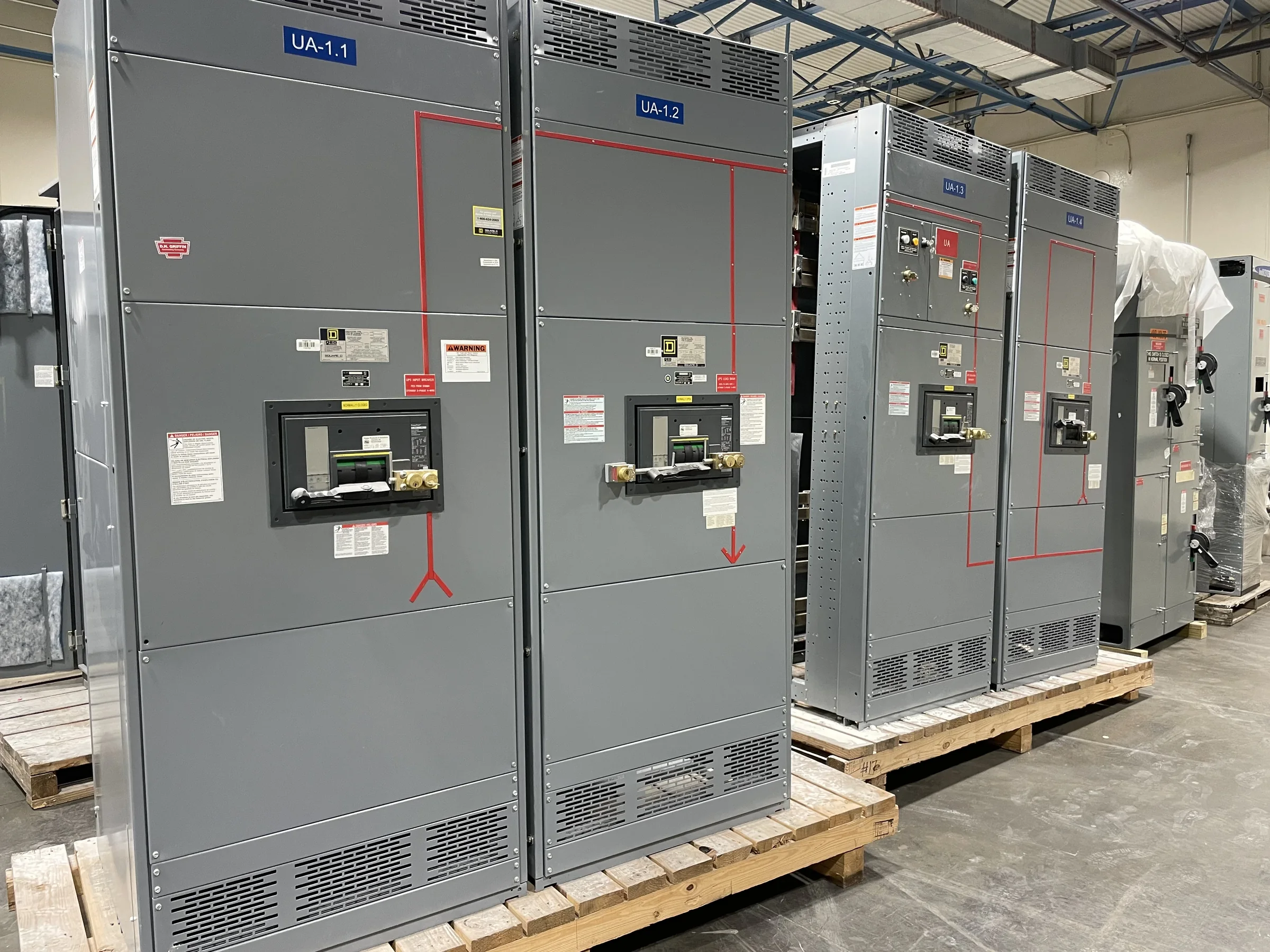
What a Switchgear Relay Does
A switchgear relay monitors electrical conditions and directs a protective device to act when measurements meet configured criteria. Depending on the application, it may receive current or voltage signals from instrument transformers, compare them with settings, and issue a trip command to a circuit breaker. The relay is not the breaker: the breaker interrupts current, while the relay makes a protective decision and communicates that decision through the control circuit. This distinction matters when reviewing a replacement, because a relay that fits the panel physically may still be incompatible with the sensing inputs, control voltage, trip circuit, or protection scheme. Confirm the required functions and interfaces with the equipment drawings and responsible engineer before specifying a new switchgear assembly or retrofit.
Protection Functions and System Coordination
Relay functions are selected to address credible electrical faults and abnormal operating conditions, not simply to add features. Depending on the system, protection may include overcurrent, ground-fault, undervoltage, differential, or other functions; the appropriate set depends on the one-line diagram, available fault current, grounding method, equipment, and operating modes. Settings must coordinate with upstream and downstream protective devices so a fault is cleared by the intended breaker without unnecessarily interrupting healthy loads. Poor coordination can widen an outage or leave equipment exposed to damage. A project specification should identify required protection functions and coordination-study responsibilities, while final settings and applicability remain project-specific. Do not assume that a relay or switchgear rating can be chosen without system data and engineering review.


Relay, Breaker, and Instrument-Transformer Compatibility
The relay works as part of a protection chain: instrument transformers provide inputs, wiring carries signals, the relay evaluates them, and a control circuit operates the breaker. Each link must be compatible. For procurement, compare the existing or planned current- and voltage-transformer ratios and characteristics, relay input requirements, auxiliary power, trip-coil requirements, contact logic, communications, and terminal arrangements against the project documents. A mismatch may cause unreliable measurement, prevent a trip command from reaching the breaker, or complicate commissioning. For replacement work, record the switchgear manufacturer and model, breaker details, relay catalog information, control schematics, and any approved modifications. Similar-looking devices are not proof of interchangeability. Have the engineer and equipment manufacturer confirm the proposed configuration before release; exact compatibility depends on the assembly and application.
Settings, Records, and Commissioning Planning
Protection settings are part of the system design and operating record, not values to infer from a relay label or copy blindly from another installation. They should be based on applicable study results and documented for the specific source, equipment, and operating configuration. During procurement, identify who will provide approved settings, configure the relay, verify wiring and trip paths, and document test results. The handover package may need current drawings, relay function and configuration records, settings files, coordination-study references, and clear revision control. These records help maintenance teams distinguish an approved change from an undocumented adjustment after a fault or equipment modification. Commissioning scope, procedures, and acceptance criteria should be agreed before shipment; testing requirements depend on the project and must be performed by qualified personnel under applicable safety practices.
Selecting New Switchgear for the Application
A relay specification should be developed alongside the switchgear specification, because enclosure layout, breaker type, control power, metering, communications, and protection functions affect one another. Start with the one-line diagram, system voltage, available fault information, load and operating requirements, and any utility or facility standards that apply. For low-voltage switchboard projects, UL 891 may be relevant to an appropriately evaluated assembly; it is not a blanket certification for medium- or high-voltage equipment, and a relay alone does not establish assembly compliance. State required functions and documentation without assuming a particular product carries a label or that a legacy relay can be reused. A U.S. manufacturer can discuss a new custom-built configuration and American components, but ratings, standards, evaluation, and availability must be confirmed for the specific project.
Site Constraints, Schedule, and Delivery Coordination
The installation environment and delivery route can affect equipment selection and project timing as much as the relay function. Before requesting a quote, document available room dimensions, access openings, equipment clearances, cable entry and exit, conduit locations, environmental conditions, and planned shutdown windows. Confirm whether the existing gear must remain in service until a scheduled cutover and how the new assembly will be received, stored, moved, and positioned. Missing access or interface details can prompt drawing revisions or complicate installation, so share current site information and identify decision dates early. Discuss required submittals, review cycles, production timing, and shipping coordination with the manufacturer; short lead times and nationwide shipping are offerings, not guaranteed dates. Final delivery and fit depend on project scope, approvals, configuration, and site readiness.