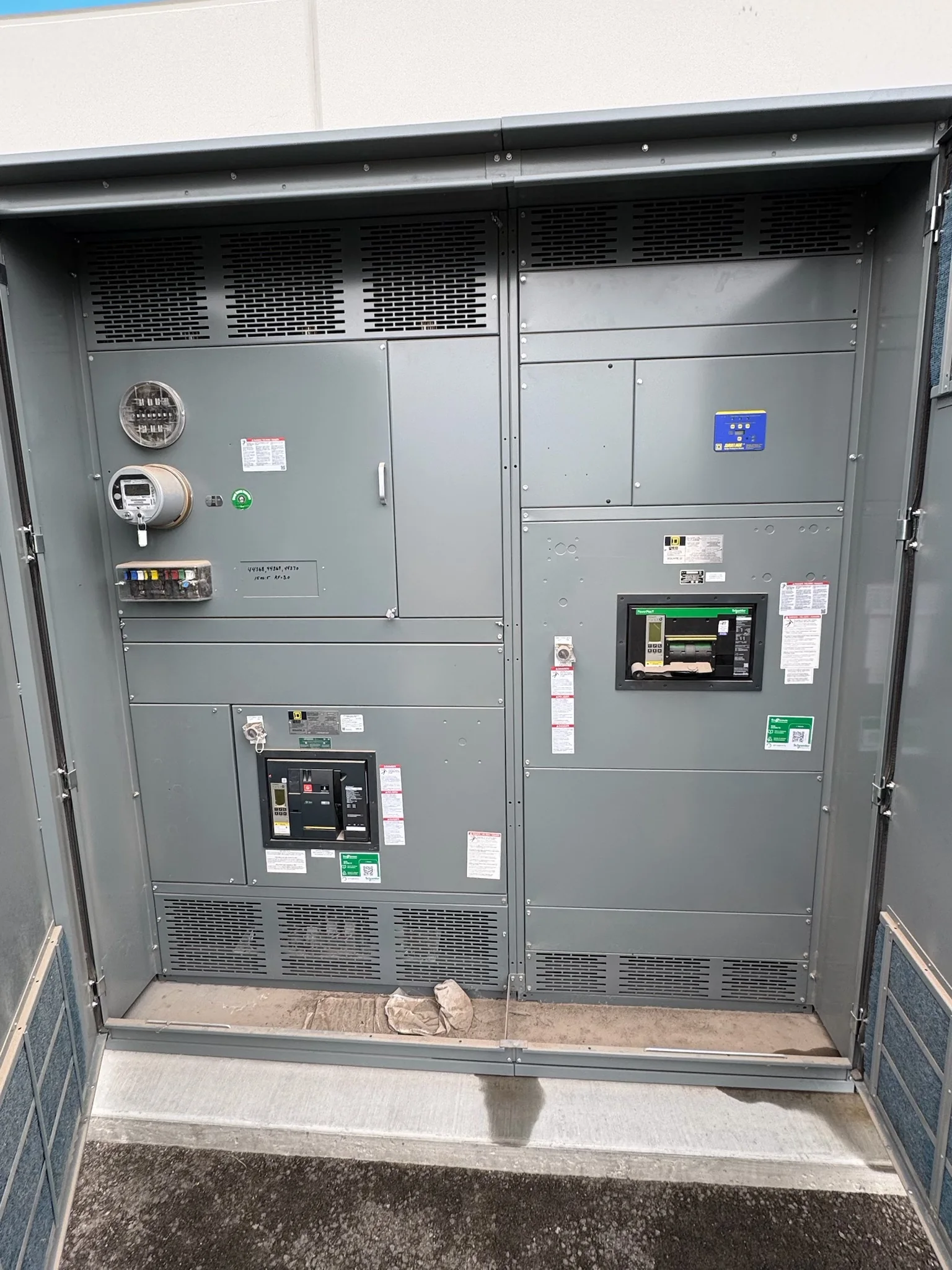
What an Arc Flash Study Evaluates
An arc flash study is an engineering assessment of electrical equipment and the conditions that could expose workers to thermal energy if an arc fault occurs. It models the electrical system to estimate incident energy at defined working distances and determine an arc-flash boundary, using applicable methods such as IEEE 1584. The result is not a prediction that an arc will occur, nor a guarantee that equipment is safe to approach. It is one input to a broader electrical safety program, alongside shock-risk assessment, safe work procedures, training, and controls. Because even low-voltage equipment can present an arc-flash hazard, voltage alone is not a reliable basis for deciding whether an assessment is needed.
System Data Determines the Quality of the Results
The calculations depend on a reliable model of the installation, not just a list of switchboard and panel ratings. Engineers need information such as one-line diagrams, transformer data, conductor sizes and lengths, protective-device types and settings, and available utility fault-current information. Operating configurations matter too: a tie breaker may be open in normal service but closed during maintenance or backup operation, changing the modeled sources and fault-clearing times. Missing or outdated data can make results less representative of actual conditions. A site walkdown and records review can help identify discrepancies, but access to electrical rooms and coordination with qualified site personnel must be planned. The facility’s engineer should review assumptions before calculations are finalized.


Protective Devices and Operating Scenarios Matter
A key study decision is how protective devices are represented and which credible operating cases are evaluated. Incident energy is affected by fault current and by how quickly a breaker or fuse clears the modeled fault; a higher fault current does not automatically produce a higher result if the device operates faster. Conversely, settings chosen to improve coordination or maintain continuity can affect clearing time and calculated exposure. Engineers may examine normal, alternate-source, generator, or tie-closed configurations where those conditions apply. The study should identify the assumed device settings and flag discrepancies between the model and installed equipment. Proposed setting changes require coordination with protection and operations stakeholders; they should not be made solely to obtain a lower label value.
How Results Support Safety and Equipment Decisions
Study findings help the employer and qualified electrical professionals evaluate work practices, boundaries, protective measures, and whether existing labels need to be created or updated under the applicable safety program. Labels communicate selected hazard information, but they do not replace task-specific risk assessment, de-energizing equipment when required, or following established safe-work procedures. Results can also reveal that protective-device coordination or equipment configuration warrants further engineering review. When replacement or retrofit switchgear is being considered, provide the study team with the proposed one-line, equipment interfaces, and intended operating arrangement. New equipment specifications should align with the protection scheme and available fault-current data. A manufacturer can discuss build requirements and documentation, while final suitability and study conclusions remain project-specific engineering matters.
Documentation to Request and Keep Current
A useful deliverable package should make the analysis reviewable and maintainable, not merely provide a set of labels. Ask what system model, assumptions, operating cases, device settings, calculation method, and field observations are documented, and whether recommendations are clearly separated from calculated results. Retain the updated one-line diagram, equipment and protective-device data, study report, and label schedule with facility records. These materials help future engineers understand why a result was obtained and what changes could invalidate it. If a utility source, transformer, feeder, breaker, or system configuration changes, the model may need review. During procurement, confirm which drawings and equipment data the switchgear supplier can provide and when; exact submittals and timing should be agreed for the project.
Planning a Study Alongside New Switchgear
Coordinate study work with equipment design early enough to avoid relying on preliminary data after the installation has changed. Procurement teams can share required voltage, bus arrangement, source and load interfaces, protective-device preferences, room constraints, and project schedule with the engineer and manufacturer. Site conditions—limited electrical-room access, restricted shutdown windows, existing cable entry locations, and the route for moving large assemblies—can affect both field verification and replacement planning. A U.S. manufacturer can discuss custom-built equipment, American components, short lead-time options, and nationwide shipping, but configuration, availability, schedule, and compatibility must be confirmed for each project. For low-voltage switchboards, UL 891 applies to appropriately evaluated assemblies; it is not a blanket claim for every product or medium- and high-voltage equipment.